Karen Kwiatkowski Quotes
It wasn't intelligence — it was propaganda. They'd take a little bit of intelligence, cherry-pick it, make it sound much more exciting, usually by taking it out of context, often by juxtaposition of two pieces of information that don't belong together.
After the invasion, much of the intelligence upon which America relied on Invading Iraq turned out to be completely wrong. It turned out that the Vice President at least, a major supporter of the invasion, had a role in “shaping” the intelligence and analysis to achieve a policy objective.
Karen Kwiatkowski, Air Force Intelligence and National Security Officer, Describing the “intelligence” that was being circulated regarding the situation leading up to the Invasion of Iraq, Interview with Robert Dreyfuss and Jason Vest, "The Lie Factory", Mother Jones, January/February 2004
Sourced by: Eigen's Political and Historical Quotations


The claims made by some Republicans were so absurd and extreme that the whole Party was tarred. Some even claimed that the legislation required “Death Panels” which would decide on which elderly people would be treated and which should be abandoned to no die with no treatment when there was no such thing even proposed by anyone, much less passed in the legislation.


See {115604} for a similar sentiment from England.

Cicely Isabel Fairfield

The Presidential Campaigns of 2008 and 2012 shocked many Americans for the blatant lies that opponents of President Obama wrote and broadcast and then some of the retaliatory lies that Obama defenders responded with. However, this quotation from a 19th century political historian shows us that blatant lying in American politics is not at all new.

Alsop, a political hawk was convinced, as many other right wingers were at the time that the Russians had forged ahead of us in offensive missiles. When he asked President Eisenhower, the President never denied it, but never went to Congress to ask for more money to close the “missile gap”. Alsop made this shocking accusation which offended many Americans, but pleased the ultra-hawks and anti-communists. Most of the nation however then believed that there was a missile gap, with varying explanations of Eisenhower’s silence on the matter. Two years later John F. Kennedy, used the “missile gap” when running in 1960 against Nixon by attacking Nixon and Eisenhower for allowing us to fall behind the Russians at have a missile gap. When Kennedy became President, he was very surprised that there was no missile gap favoring the Russians—it was favoring the United States. Eisenhower did not want the Russians to know that he knew exactly what they were producing and deploying in missiles through great espionage sources. By not saying anything in the face of the accusations, the Russians assumed that the Americans really thought that they had more capacity than they did. And Eisenhower wanted that so that they would be secure that the United States had no real knowledge of their missile capacity. If Eisenhower had actually told the nation that the Russians were really behind us, the Russians would suspect a security leak and our sources could be compromised.


George W. Bush had told the country that the reason for the Iraq War was that Iraq had developed weapons of mass destruction. After the invasion it was determined that there were no such weapons that had justified the war. Debate since has concentrated in whether the Bush administration had pressured the intelligence experts to provide the information they wanted to justify the war or whether the administration was misled by their intelligence agencies.
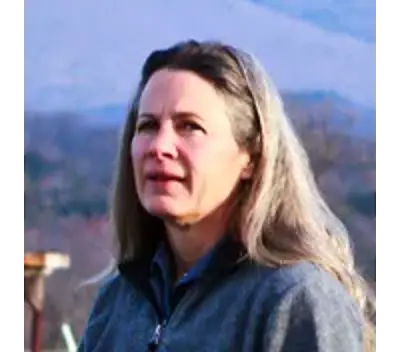
Karen U. Kwiatkowski, née Unger, is an American activist and commentator. She is a retired U.S. Air Force Lieutenant Colonel whose assignments included duties as a Pentagon desk officer and a variety of roles for the National Security Agency. Since retiring, she has become a noted critic of the U.S. government's involvement in Iraq. Kwiatkowski is primarily known for her insider essays which denounce a corrupting political influence on the course of military intelligence leading up to the invasion of Iraq in 2003. In 2012, she challenged incumbent Bob Goodlatte, in the Republican primary for Virginia's 6th congressional district seat in the United States House of Representatives and garnered 34% of the Republican vote on a constitutional and limited government platform.
