George Stigler Quotes
It was in the 1960s that I began the detailed study of public regulation.
Stigler, George J. "George J. Stigler - Biographical." Les Prix Nobel. The Nobel Prizes 1982, edited by Wilhelm Odelberg, Nobel Foundation, 1983.


in the Meltdown of 2008 Gramm was one of the most ideological deregulators in Congress. As the Meltdown of 2008 hit, he immediately made this statement when few people even knew the extent of what had happened, much less why it happened. Gramm’s instant absolution of deregulation as one of the causes is a classic case of denial. There were few economic issues of controversy that did not contribute to the totality of causes. And a few years later Gramm was one of the very few ideologues who still believed that deregulation did not have a role in the Meltdown and the Great Recession that followed. For a contrast from the expert in his own party, see {638023}.


TR came from a wealthy, upper class family, and because of his position favoring regulation of corporations he was called a traitor to his class by many.

This rigid view left no room for regulation which is what almost every modern industrial democracy has chosen. To some of his extremist followers, any government regulation of business or the economy whatsoever, regardless of how little, means that the nation has embraced socialism. It is in this sense that many extreme right wingers viewed Presidents like Franklin Delano Roosevelt, Harry Truman, John Kennedy, Bill Clinton, and Barack Obama as socialists while they saw themselves as opponents of socialism.
Mises observes the classic philosophical quandary of business and commerce. If we cannot leave everything to the market place and the capitalists and entrepreneurs because they are morally and ethically fallible, will not the government people who regulate and control them be equally moral and fallible? Mises critics point out that Mises misses the difference in a democracy, that if fallible businessmen err, all can suffer and their personal vested interests do not necessarily coincide with the interests of the majority in general. If the government representative of the majority are fallible and err, the majority can correct them and if the majority does not, the people have undone themselves and have not been the victims of the foibles of a few privileged people in the society. Mises argues that it is the minority who, if left alone, would produce the best standard of living for the majority who should exercise they right to regulation only by their acts as consumers.


In the latter half of the 20th century socialist thinking generally shifted from seeing Capitalism as the problem of society to viewing capitalism as a necessary component of modern democratic socialism. See {637821} as an example. The standard of living of all the workers depended in great part on the success of capitalism in the country. With that importance came more and more influence on government officials by capitalists. Many of the socialists and other left wingers frequently think the situation has gone too far, and it is the capitalists who are running the nation and not the citizens.


This is a very important historical quotation because it clearly stated the left wing view of regulation. Large Business had been so unethical and illegal at the time that the majority of Americans and Congress, together with a Republican President, thought that it would be good to “weld” the growth and development of large companies to the Government. The right wing saw this as extreme Communism. Over time, when corporate greed and excesses had been controlled by government and was not as prevalent, the inhibition on growth and development of welding corporations to Government was recognized and a period of deregulation followed with most Americans not wanting to allow large companies to be completely deregulated and also not wanting them welded to the government. The extent of regulation has been the political contest with the extreme left and extreme right still holding to their ideological positions and sometimes paralyzing the middle as in the Obama administration.


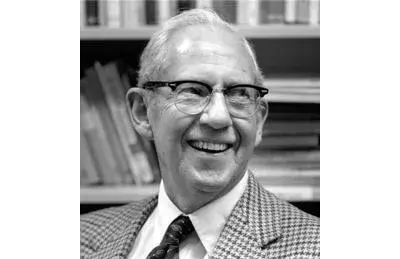
George Joseph Stigler was an American economist, the 1982 laureate in Nobel Memorial Prize in Economic Sciences and a key leader of the Chicago School of Economics.
