J. Edgar Hoover Quotes
It was gross negligence…. We failed in carrying through some of the salient aspects of the Oswald investigation. It ought to be a lesson to us all, but I doubt if some even realize it now.
Despite pleas from his second in command not to punish the agents who botched key parts of the Oswald investigation, Hoover disciplined 17 agents with his 1964 memo. No one was more careful to “protect” the image of the FBI than Hoover. He used his powers to classify documents as “Secret” and did so for all the documentation of the FBI negligence and the discipline until 2000 when it became public.
J. Edgar Hoover, 1895-1972, Director, Federal Bureau of Investigation Memo, October 1964, The first sentence however was written on December 10, 1963
Sourced by: Eigen's Political and Historical Quotations

Disciplining agents for dereliction in the Oswald investigation would be seen as Early in 1962, the FBI, the CIA, the Pentagon, and the Immigration & Naturalization Service all had files on Oswald but none of them shared the information with any of the other agencies. Before the Kennedy murder, the FBI had gathered evidence that Oswald may have been a deranged Marxist who supported the Cuban Revolution. The Central Intelligence Agency knew that Oswald was working at the Texas Book Depository. If the Secret Service had been privy to these agency’s files or even one of them, the Kennedy Assassination might have been prevented. Also, to J. Edgar Hoover’s later distress, the FBI did not follow up and locate Oswald when they learned their facts. He disciplined several agents. See {634531}. No one was more careful to “protect” the image of the FBI than Hoover. He used his powers to classify documents as “Secret” and did so for all the documentation of the FBI negligence and the discipline until 2000 when it became public.


Elements of the Army lied to the family of the dead soldier and the media, and then tried to cover up the lies. Abazaid is one of the few government high officials who was candid about his agency’s failure.


Senator Church was the chairman of the committee. It’s reports (14 in all) are the most extensive documentation of U. S. intelligence ever compiled.


The director was being castigated for a series of blunders which had just culminated with the failure to disclose documents in their possession to the defense team in the Timothy McVeigh case.


This was the reason that the FBI withheld information from the Warren Commission investigating JFK’s assassination. J. Edgar Hoover, the FBI Director was concerned that some people might conclude that the FBI bore some of the responsibility for the assassination for losing track of him. The CIA also withheld information to the commission to cover some of their misdeeds.


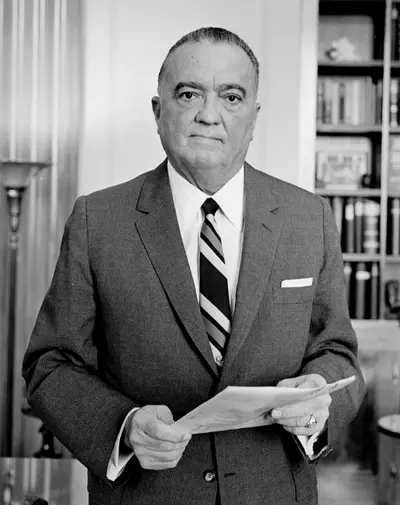
- Born: January 1, 1895
- Died: May 2, 1972
- Nationality: American
- Profession: Public Servant
John Edgar Hoover was an American law enforcement administrator who served as the first Director of the Federal Bureau of Investigation (FBI) of the United States. He was appointed director of the Bureau of Investigation – the FBI's predecessor – in 1924 and was instrumental in founding the FBI in 1935, where he remained director for another 37 years until his death in 1972 at the age of 77. Hoover has been credited with building the FBI into a larger crime-fighting agency than it was at its inception and with instituting a number of modernizations to police technology, such as a centralized fingerprint file and forensic laboratories. Hoover is also credited with establishing and expanding a national blacklist, referred to as the FBI Index or Index List, renamed in 2001 as the Terrorist Screening Database which the FBI still compiles and manages.
