J. Edgar Hoover Quotes
If we [are] to fully discharge the serious responsibilities imposed upon us, the confidential character of our files must be inviolate.
J. Edgar Hoover, 1895-1972, Director, Federal Bureau of Investigation, Quoted in Jencks v. United States
Sourced by: Eigen's Political and Historical Quotations


The “wrong” people to Helms. Were Americans who disagreed with his methods and politics—especially members of Congress who wanted to make the CIA more accountable for its actions. If nothing is ever written down and everything is secret, there is no practical way of holding the agency accountable in a democracy. Helms was later convicted to perjury for lying to Congress.


Senator Church was the chairman of the committee. It’s reports (14 in all) are the most extensive documentation of U. S. intelligence ever compiled.
Senator Church was the chairman of the committee. It’s reports (14 in all) are the most extensive documentation of U. S. intelligence ever compiled.

Privacy was a much more important value then and for Smith and most contemporaries there should be NO compromising records kept at all. Keeping records secret was itself an unacceptable compromise.


Gates believed that ideally the government would have the trust of the people to access critical data, but that at the moment there are many who do not trust the government. Unfortunately, the FBI on many occasions have themselves broken the law and targeted people who had political and social viewpoints of which the FBI leadership did not approve. The CIA has on many occasions violated the law and repeatedly lied to Congress and even Presidents. The National Security Agency has also, in its zeal to carry out its mission skirted the law and the Director of National Intelligence blatantly deceived Congress and was exposed by the Snowden releases. Gates was an optimist and thought that the government could regain the necessary trust to allow it to have access to virtually all data in order to best protect society from things like terrorism with biological weapons.

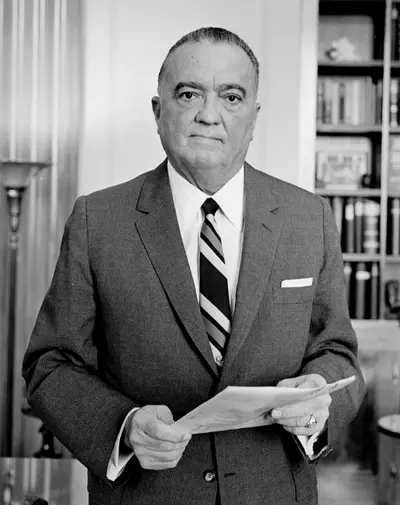
John Edgar Hoover was an American law enforcement administrator who served as the first Director of the Federal Bureau of Investigation (FBI) of the United States. He was appointed director of the Bureau of Investigation – the FBI's predecessor – in 1924 and was instrumental in founding the FBI in 1935, where he remained director for another 37 years until his death in 1972 at the age of 77. Hoover has been credited with building the FBI into a larger crime-fighting agency than it was at its inception and with instituting a number of modernizations to police technology, such as a centralized fingerprint file and forensic laboratories. Hoover is also credited with establishing and expanding a national blacklist, referred to as the FBI Index or Index List, renamed in 2001 as the Terrorist Screening Database which the FBI still compiles and manages.
