Napoleon Bonaparte Quotes
It strengthens the bonds between nations to have the same civil laws and the same monetary system.
Herold, J. Christopher. The Mind of Napoleon: A Selection from His Written and Spoken Words. Columbia University Press, 1955, p. 77.

Stieglitz was a critic of the Euro and the general notion of countries federating politically trying to have a common currency, He argued that the individual nations lose some of the major tools they have to affect the economy if things are not good economically.

Those environmentalists who take this view do not give credence to other alternatives. For example, the same argument of environmental decision-making could logically justify one superpower nation taking over the government of all others on the planet for environmental matters. Another possibility is that the existing mechanisms and the UN are sufficient if the major powers reach agreement. Another is that science and technology will provide solutions.

This quotation is particularly noteworthy as it is a classic example of a modern conspiracy theory. In this literal case, the author actually uses the word “conspiracy,”


He was one of the first to recognize this phenomenon. See the related quotes for others who were early observers of the coming changes.


A decade after he made this observation, the external economic markets were not happy with the ways the Greek Government had handled the economy and the nation became insolvent. The IMF, World Bank and the other European nations bailed Greece out be making emergency loans, but then they imposed conditions on the Greek Government that was completely contrary to what the Greek politicians and the Greek voters wanted. The Greek national government had almost no control over their own economy.


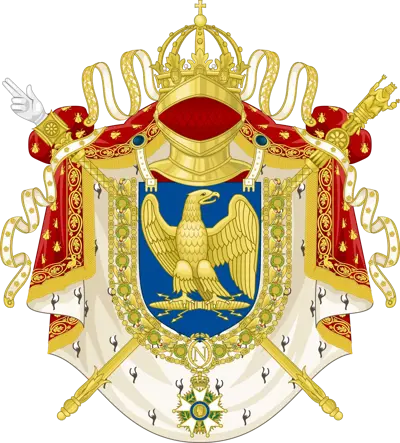
Napoléon Bonaparte was a French military and political leader of Corsican descent. He rose to prominence during the French Revolution and led several successful campaigns during the Revolutionary Wars. As Napoleon I, he was Emperor of the French from 1804 until 1814, and again in 1815. Napoleon dominated European and global affairs for more than a decade while leading France against a series of coalitions in the Napoleonic Wars. He won most of these wars and the vast majority of his battles, building a large empire that ruled over continental Europe before its final collapse in 1815. One of the greatest commanders in history, his wars and campaigns are studied at military schools worldwide. He remains one of the most celebrated and controversial political figures in human history.
