Gilbert K. Chesterton Quotes
It never occurred to him to be spiritually won over to the enemy. Many moderns, inured to a weak worship of intellect and force, might have wavered in their allegiance under this oppression of a great personality. . . . But this was a kind of modern meanness to which Syme could not sink even in his extreme morbidity. Like any man, he was coward enough to fear great force; but he was not coward enough to admire it.
Chesterton, G. K. The Man Who Was Thursday. J. W. Arrowsmith, 1908, p. 248.


Robespierre was the driving force behind the Reign of Terror where hundreds of thousands of French citizens were beheaded because they were accused of not being loyal enough to the regime.

The papyrus appears to be an instruction booklet for government officials. The Egyptians did not understand the function of the brain. They believed that rational thought and intellect came from the heart while the belly produced the emotions. As you can see from this precept, politicians and officials were warned about getting too emotional.


There are many who disagree with this notion. They instead believe that circumstances and conditions will shape a great person’s actions. If character determined action and behavior, it would be very difficult to explain a great man who changes his mind on a major issue. Was the flip-flop the result of a radical character change? If not who would the same character produce two different outcomes with the same person?


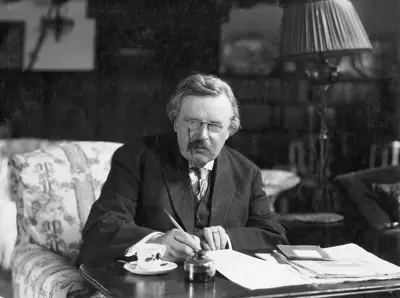
Gilbert Keith Chesterton KC*SG was an English writer, philosopher, lay theologian, and literary and art critic. He has been referred to as the "prince of paradox". Time magazine observed of his writing style: "Whenever possible Chesterton made his points with popular sayings, proverbs, allegories—first carefully turning them inside out."
