Yehuda Ashlag Quotes
It is unwise to think that, in the end, the most just ideal shall triumph over the other ideals. When considering their transient nature, they are all just, for “Every man has his place, and every thing has its time”, as our ancient sages have said.
Yehuda Ashlag, 1886-1954, Jewish Kabbalist Philosopher from Jerusalem, The Solution
Sourced by: Eigen's Political and Historical Quotations


This proverb operates with the force of law and in a sense is the doctrine of contributory negligence. I have a right to compensation for damage you have done me unless I have done something which impinges on your rights. If your camel destroys my crops, my rights have been violated, but if had used your camel without your permission, and he got out of control. I right is cancelled out. In a larger sense, this principle is used globally in international disputes. The Israeli right to live in peace has been, in the view of some Arabs, “cancelled out” by the fact that the Israelis have taken others land.


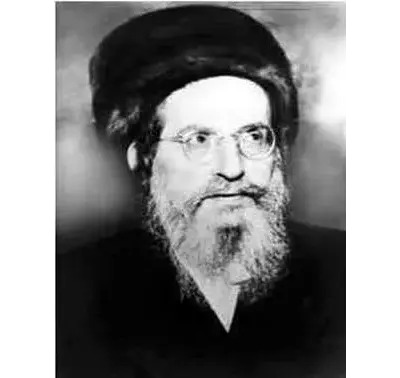
Rabbi Yehuda Ashlag (1885–1954) or Yehuda Leib Ha-Levi Ashlag (Hebrew: רַבִּי יְהוּדָה לֵיבּ הַלֵּוִי אַשְׁלַג), also known as the Baal Ha-Sulam (Hebrew: בַּעַל הַסּוּלָם, "Author of The Ladder") in reference to his magnum opus, was an orthodox rabbi and kabbalist born in Łódź, Congress Poland, Russian Empire, to a family of scholars connected to the Hasidic courts of Porisov and Belz. Rabbi Ashlag lived in the Holy Land from 1922 until his death in 1954 (except for two years in England). In addition to his Sulam commentary on the Zohar, his other primary work, Talmud Eser Sefirot is regarded as the central textbook for students of Kabbalah. Ashlag systematically interpreted the wisdom and promoted its wide dissemination. In line with his directives, many contemporary adherents of Ashlag's teachings strive to spread Kabbalah to the masses.
