Elizabeth Cady Stanton Quotes
It is the inalienable right of all to be happy.
Stanton, Elizabeth Cady. "Address on the Divorce Bill." 1861.


Jefferson had deliberately modified John Locke’s phrase “life, liberty and property.

This was written and adopted by Vermont a decade before the United States Constitution the ideas for which were in existence in America before the Constitutional Convention in Philadelphia.

It was drafted by John Adams. 9 Years later the French in their Revolution used the first clause in their Declaration of the Rights of Man and of the Citizen—See Quotation 602404 For an opposite point of view see Quotation 635927.


The preamble to this declaration of womens’ rights cleverly beginy s with the words of the Declaration of Independence with the single change that “all men” is replaced with “all men and women.” The message was clear. If the founders had a moral right and duty to revolt for these objectives women would be justified and duty bound to make similar efforts. That message terrified many men of the era.


The opening line of the North Vietnamese Declaration of Independence was a quotation of Thomas Jefferson’s in the American Declaration of Independence. What is even more interesting is that Ho Chi Minh who wrote it asked for and received help in checking his translation from an American agent of the OSS---Office of Strategic Service, precursor to the CIA. While Ho adopted much from the American Democratic concepts, he did not include free elections of multiple party candidates, freedom of speech, travel, or many other basics.


Although not particularly noticed at the time, FDR was the first person to use the term, “Human Rights” which is today in all our vocabularies.


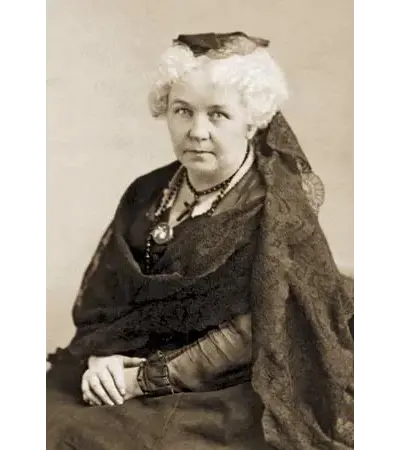
Elizabeth Cady Stanton was a leader of the women's rights movement in the U.S. during the mid- to late-1800s. She was the main force behind the 1848 Seneca Falls Convention, the first convention to be called for the sole purpose of discussing women's rights, and was the primary author of its Declaration of Sentiments. Her demand for women's right to vote generated a controversy at the convention but quickly became a central tenet of the women's movement. She was also active in other social reform activities, especially abolitionism.
