George Bernard Shaw Quotes
It is quite useless to declare that all men are born free if you deny that they are born good . Guarantee a man's goodness and his liberty will take care of itself. To guarantee his freedom on condition that you approve of his moral character is formally to abolish all freedom whatsoever, as every man's liberty is at the mercy of a moral indictment which any fool can trump up against everyone who violates custom, whether as a prophet or as a rascal.
Shaw, George Bernard. Preface. The Shewing-Up of Blanco Posnet: A Sermon in Crude Melodrama, Constable and Co., 1911, p. 25.


This quotation is probably the beginning of the false charge that liberalism always rejects God and divine law. Most liberals, since the term has been used, have been religious and even those who were not did not see liberalism as necessarily antithetical towards religion. However, most doctrines of liberality had toleration and religious freedom as part of its foundation. To authoritarian religious leaders who did not believe in toleration (see {609037}) the very toleration of dissenters is tantamount to dissent. Today, for example, many liberals tolerate atheists and non Christian religions even though most are Christians themselves. To some narrow conservatives, this principle of toleration is therefore equivalent to being against religion. To others, modern liberal belief of separation of church and state is seen as anti religious.

Crockett and a large group of Tenesseeans all died defending the Alamo for the Liberty and Independence from the Mexican Dictator, Santa Anna.


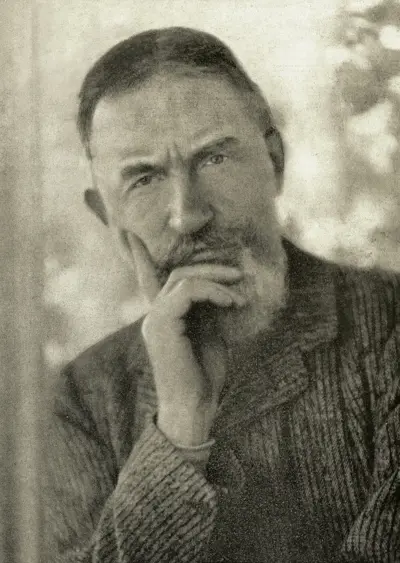
George Bernard Shaw, known at his insistence simply as Bernard Shaw, was an Irish playwright, critic, polemicist and political activist. His influence on Western theatre, culture and politics extended from the 1880s to his death and beyond. He wrote more than sixty plays, including major works such as Man and Superman (1902), Pygmalion (1912) and Saint Joan (1923). With a range incorporating both contemporary satire and historical allegory, Shaw became the leading dramatist of his generation, and in 1925 was awarded the Nobel Prize in Literature.
