Fyodor Dostoevsky Quotes
It is not the real punishment. The only effectual one, the only deterrent and softening one, lies in the recognition of sin by conscience.
Dostoevsky, Fyodor. The Brothers Karamazov. Translated by Richard Pevear and Larissa Volokhonsky, Farrar, Straus and Giroux, 1990, p. 64.


Most prisons of that age not only incarcerated the prisoners but also beat and tortured them and kept them in unsanitary and unsafe facilities. Pedro I was an incredibly modern man regarding prison reform and was years ahead of his time even by European standards.


Livermore's argument fell on deaf ears, and the amendment was passed over the objection of a few arch-conservatives.


The article he wrote was the first serious plan and proposal to repeal Prohibition which was opposed by most people after the country had experienced the negative unintended consequents of making alcohol illegal. This was not unlike the second thoughts that many Americans began to develop regarding the War on Drugs at the end of the 20th century. Many felt the good that prohibition did (it improved the nation’s healt) was not worth the bad that came with it (crime, corruption, police brutality, disrespect for the law.)


While Woodhull was an ardent feminist, she had a complete platform dealing with almost all aspects of society. At the time, women were unable to vote, and the support she did get came from men. She was a serious candidate. She was appealing to most of the mens issues of the time.

Free Negroes were banned by many states and local governments or otherwise restricted in their movements and occupations. The “safety of society” referred to the belief of most Southern whites that the mere presence of free Negroes would undermine the slavery system and encourage slave revolts and retribution against the slave owners. At this point Jefferson was considering a plan to patriot Negroes back to Africa. Jefferson, at this point, thought that this might be the fairest and best solution for all.


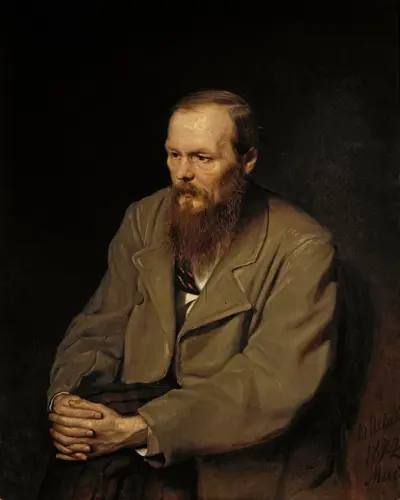
Fyodor Mikhailovich Dostoevsky, sometimes transliterated as Dostoyevsky, was a Russian novelist, philosopher, short story writer, essayist, and journalist. Dostoevsky's literary works explore human psychology in the troubled political, social, and spiritual atmospheres of 19th-century Russia, and engage with a variety of philosophical and religious themes. His most acclaimed works include Crime and Punishment (1866), The Idiot (1869), Demons (1872), and The Brothers Karamazov (1880). Dostoevsky's body of works consists of 12 novels, four novellas, 16 short stories, and numerous other works. Many literary critics rate him as one of the greatest psychological novelists in world literature. His 1864 novel Notes from Underground is considered to be one of the first works of existentialist literature.
