Pearl S. Buck Quotes
It is not healthy when a nation lives within a nation .... A nation cannot be confident of its tomorrow if its refugees are among its own citizens.
Pearl S. Buck, 1892-1973, Nobel Laureate in Literature, What America Means to Me, 1943
Sourced by: Eigen's Political and Historical Quotations


In France, poor immigrants tended to be clustered into suburban neighborhoods where few jobs were available, the schools were inferior, recreational facilities were sparse, and there were few opportunities to mix with other French residents. Yet, similar correlations between geography and opportunity have existed in almost all parts of the world with the most obvious reflected in the massive worldwide migration to the cities from the rural areas and countryside which took place in the United States in the 20th century and most other nations in the latter part of that century and the beginning of the 21st. Chances in life have been and are very much determined by geography.


These were Catholic militias who armed themselves to protect against Protestant anti-Catholic violence. However, once organized they became a political force, a pattern which continued till modern times—organizations originally designed to protect against sectarian violence become major political forces, sometimes perpetrating more sectarian violence. Grattan, a parliamentarian unusual for his times, was one of the first to argue for the obligation of an elected member to the will of the electorate was offended by the Volunteers crudely trying to exercise political power while having no democratically elected leadership.


Kent came from a very affluent family,
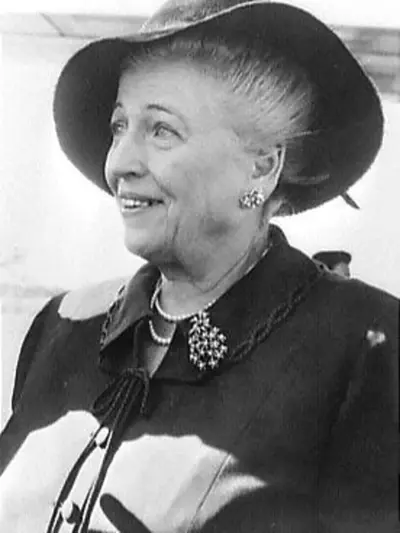
Pearl Sydenstricker Buck also known by her Chinese name Sai Zhenzhu (Chinese: 赛珍珠) was an American writer and novelist. As the daughter of missionaries, Buck spent most of her life before 1934 in Zhenjiang, China. Her novel The Good Earth was the best-selling fiction book in the United States in 1931 and 1932 and won the Pulitzer Prize in 1932. In 1938, she was awarded the Nobel Prize in Literature "for her rich and truly epic descriptions of peasant life in China and for her biographical masterpieces". She was the first American woman to win the Nobel Prize in Literature.
