Ludwig von Mises Quotes
It is not conclusive proof of a doctrine's correctness that its adversaries use the police, the hangman, and violent mobs to fight it. But it is a proof of the fact that those taking recourse to violent oppression are in their subconscious convinced of the untenability of their own doctrines.
Mises, Ludwig von. Human Action: A Treatise on Economics. Yale University Press, 1949, p. 74.


What is particularly interesting about this passage is that a Middle Eastern contemporary historian and commentator compared circumstances to political events with the Umayyads and the Abbisids to those in Persia and Rome. Chosroes (Khosrow) was a Persian King who had his brothers murdered, and Caesar was viewed as a tyrant. Even then, the history of politics, in one country influenced events and attitudes in others,


This was the group that decided who was to be executed in the Reign of Terror
Head of the Sikh Religion. None of his predecessors had used arms, but he not only did so but often wore two swords representing the spiritual and civil domains.

James was a Catholic King and did not like Protestants but positively detested Puritans. He made good his and “harried them out of the land” much to the benefit of the American colonies to which they immigrated and the detriment of England. Many of the immigrants to America came for the religious freedom, but in the early days, no sooner did they arrive and become the majority, than they began to discriminate against other religions.

While Ray was very sympathetic towards the strike, his father’s attitude was typical of that of business men across the nation. A picket line or demonstration was a “mob” and mobs should be broken up before they do physical damage to people or property. “Grape” and “canister” were types of ammunition for cannon that was used against personnel in war. One shell could kill 20-30 men in a crowd.


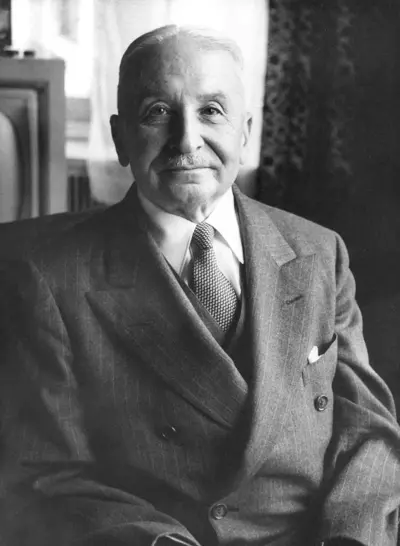
Ludwig Heinrich Edler von Mises was an Austrian School economist, historian, logician and sociologist. Mises wrote and lectured extensively on the societal contributions of classical liberalism. He is best known for his work on praxeology, a study of human choice and action.
