Thomas Paine Quotes
It is never to be expected in a revolution that every man is to change his opinion at the same moment. There never yet was any truth or any principle so irresistibly obvious that all men believed it at once. Time and reason must cooperate with each other to the final establishment of any principle; and therefore those who may happen to be first convinced have not a right to persecute others, on whom conviction operates more slowly. The moral principle of revolutions is to instruct, not to destroy.
Thomas Paine, 1737-1809, British American Political Philosopher, First Principles of Government, July 1795
Sourced by: Eigen's Political and Historical Quotations


1st Earl of Beaconsfield


It was only a short time before the public attitude of Americans on homosexual marriage went from hardly anyone approving to a majority of the public approving.


At the time he and the Obama administration had favored legal domestic partnerships for gays but opposed same sex marriage. However, he and the President were having moral and legal doubts and there seemed to be an acceptance of homosexuality emerging in society. The administration then changed their position and within just a few years, same sex marriage had become legal in over 10 states and was being politically debated in many others. In many parts of the country, Biden’s prediction came true in much of America, and the change in political and public opinion was occurring in more and more places.


Saloth Sar Pol Pot. He exterminated over 1 million of his own people who were obstacles to his idea that all people should live in villages. Victims included people who were city residents, intellectuals which meant anyone with an education, and even people who wore glasses were killed.

In China, the religious activities of the Missionaries never really lead to the many troubles between the missionaries and the Chinese. It was their activities in the non-religious arenas articulated here by Denby.


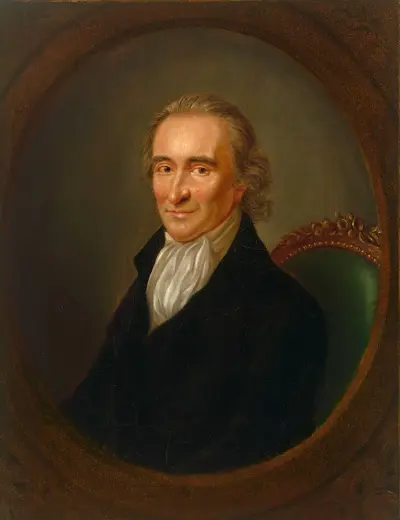
Thomas Paine was an English-born American political activist, philosopher, political theorist, and revolutionary. He authored Common Sense (1776) and The American Crisis (1776–1783), the two most influential pamphlets at the start of the American Revolution, and helped inspire the patriots in 1776 to declare independence from Great Britain. His ideas reflected Enlightenment-era ideals of transnational human rights. Historian Saul K. Padover described him as "a corsetmaker by trade, a journalist by profession, and a propagandist by inclination".
