Kim Il-sung Quotes
It is necessary to expose the false propaganda of the imperialists and thoroughly dispel the illusion that the imperialists will give up their positions in the colonies and dependent countries with good will.
Kim, Il-sung. "The Great Anti-Imperialist Revolutionary Cause of Asian, African and Latin American Peoples Is Invincible." Kim Il Sung: Selected Works, vol. 4, Foreign Languages Publishing House, 1968, p. 541.


Samuel Langhorne Clemens, 1835-1910


At the time, many of the European powers were seizing African and Asian colonies.


In 1927 there was a Peasant Uprising in the Hunan Province of China. Young Mau went there and wrote a report. Mao and other young communist leaders had a much more acute appreciation of sloganeering than their older revolutionary comrades. Even into the 3rd millennium, the same “Down with Imperialism” slogan could be heard in many part of the world, long after the Soviet Union collapsed and China and become capitalistic.

During the Reign of Terror of the French Revolution some powerful Frenchmen in the French Colonies wanted to maintain the caste system to keep the Blacks and other indigenous people from claiming equal rights. They claimed that the colonies would perish. But the French Revolutionaries were committed to “Liberty, Equality, and Fraternity”, and Barnave summed up their viewpoint in this succinct statement of policy which became a memorable quotation.

Earlier, his father had also castigated the ministers over their inept hard-line handling of the American Revolution. See {641505} .

_0_thumbnail_47x47.jpg)


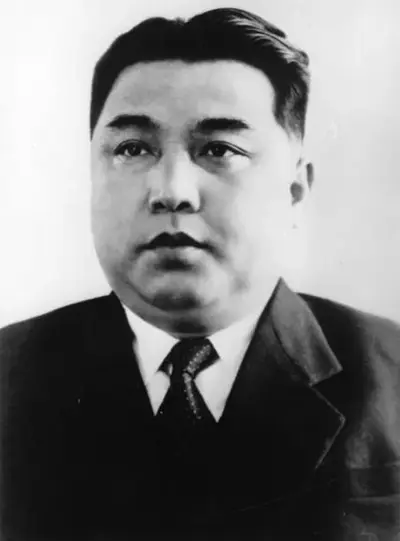
Kim Il-sung was a politician and the founder of North Korea, which he ruled from the country's establishment in 1948 until his death in 1994. He held the posts of Premier from 1948 to 1972 and President from 1972 to 1994. He was also the leader of the Workers' Party of Korea (WPK) from 1949 to 1994 (titled as Chairman from 1949 to 1966 and as General Secretary after 1966). Coming to power after the end of Japanese rule in 1945, he authorized the invasion of South Korea in 1950, triggering an intervention in defense of South Korea by the United Nations led by the United States. Following the military stalemate in the Korean War, a ceasefire was signed on 27 July 1953. He was the third longest-serving non-royal head of state/government in the 20th century, in office for more than 45 years.
