Charles Fourier Quotes
It is known that the best nations have always been those which concede the greatest amount of liberty to women.
Fourier, Charles. The Theory of the Four Movements. Translated by Ian Patterson, Cambridge University Press, 1996, p. 132.


This quotation illustrates the statement of a reform principle to appease international interests in basic human rights. This type of statement provides the “fig leaf” for the UN and other organizations to pretend that international standards of human rights are being maintained. Nasser did not implement this principle. By the beginning of the 21st century, Egypt was finally making some progress on women’s equality issues. The prohibition on female members of Parliament—{586723}—had been reversed but women were still not allowed to be judges in a criminal trial, laws against infant female circumcision, and other elements of female equality were still not in existence.


Stowe persuaded Lockwood to stand for President. They tried to recruit a man for the Vice Presidential nomination, and when they could not, Stowe became the first female to become a Vice Presidential candidate.

This remarkable statement was written in about 1840 and there was probably then few people of either gender who would think such a thing possible.

Vladimir Lenin. Because Lenin was such an ardent feminist it was very easy for the opponents of women’s suffrage and equality to label anyone who took that position as a Communist. The conflation of opposition to sexism and racism and communism has been a tactic that was very effective over the years and is still used today by people who think corrective action to reach equality has gone too far.


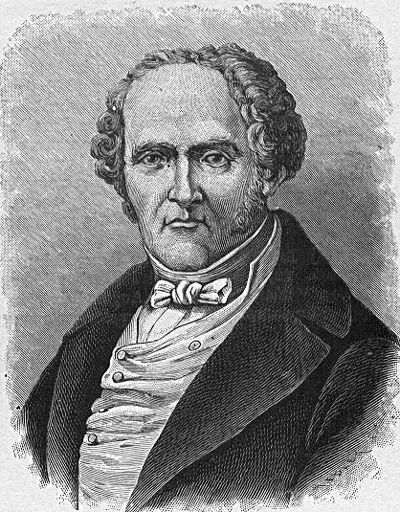
François Marie Charles Fourier was a French philosopher, an influential early socialist thinker and one of the founders of utopian socialism. Some of Fourier's social and moral views, held to be radical in his lifetime, have become mainstream thinking in modern society. For instance, Fourier is credited with having originated the word feminism in 1837.
