Richard Hofstadter Quotes
It is ironic that the United States should have been founded by intellectuals, for throughout most of our political history, the intellectual has been for the most part either an outsider, a servant or a scapegoat.
Richard Hofstadter, 1916-1970, Historian, Anti-Intellectualism in American Life
Sourced by: Eigen's Political and Historical Quotations


This may be one of the most anti-intellectual, anti educational statements made in the history of American campaigns. Santorum was one of 9 Republicans seeking the 2012 Presidential nomination. He was a favorite of the radical religious right which was an important constituency of the Republican Party at that time. The 9 candidates tried to outdo each other in how they could attack President Barack Obama, then running for a second term. While Obama had a very large percentage of Americans who “liked him” even when they disagreed with his policies, the right wing base of Republicans literally hated the man and would see evil in anything Obama did or said. One of the main positions of the President had been making college affordable for every American young person. Normally, this would be approved by almost all citizens and voters. However, this quotation illustrated the degree of hatred and paranoia. The audience, instead of laughing at the absurdity of Santorum’s accusation, roared its approval. There were not enough Republicans who shared the same degree of Paranoia about Obama, and Santorum was not elected as the nominee. There has always been in America a fundamentalist religious minority who feared college and higher eductation as not adhereing to the literal reading of The Bible, even when the colleges were Christian religious institutions which the early Ivy League colleges were: Brown, Yale, Princeton, Harvard and Columbia. As these schools have become secular, some religious fundamentalists opposed sending their children to them and saw the institutions in a negative light. Santorum’s constituency included those Americans.


He was referring to Erich Hermann Wilhelm V̦gelin; [January 3, 1901 РJanuary 19, 1985) was political philosopher. He was born in Cologne, and educated in political science at the University of Vienna, at which he became an associate professor of political science at the Faculty of Law. In 1938 he and his wife fled from the Nazi forces which had entered Vienna, and emigrated to the United States, where they became citizens in 1944. He spent most of his academic career at the University of Notre Dame, Louisiana State University, the University of Munich and the Hoover Institution of Stanford University. He was a very elitist intellectual who was a favorite of Conservatives. A number of his accomplished students, however were very egalitarian and were active liberals and populists. America is one of the few countries and cultures in the world where political, religious and philosophical views do not get passed from one generation to the next by family and teachers. America's freedom has been not only legal freedom but has stimulated cultural freedom as well, sometimes to the distress of older generations who want their values and ideas preserved and transmitted through the c=generations.


His hope that the elite intelligentsia would lead the nation was thwarted by Islamic fundamentalism which destroyed most of Pakistan education by only teaching religion in its Madrassas and not allowing the leadership to have compulsory education. There has been an enormous brain drain with a huge number of the Pakistani intelligentsia on which Jinnah pinned his hopes, had no opportunity in Pakistan and emigrated to the United Kingdom and America.

There has always been in America a subpopulation which has distrusted intellectuals and educated people. The bias against intellectuals and well educated people ebbs and flows but it is always present. In this 1920 quotation the suspicion was there as today but did not have the name calling that tended to accompany this bias in the latter part of the 20th century and beginning of the 21st. Some of the bias is in reaction to a snobbishness that has been exhibited by some intellectuals, but the bias against intellectuals is generally strongest amongst the least educated groups in America. The South in particular has tended to have the weakest educational systems and institutions, and the vast majority of intellectuals were against the Southern racism and discrimination that used to prevail so extensively, and the vestige of anti intellectualism is still there despite the fact that the gap between Southern education and institutions is nowhere near as large as it used to be. Religious fundamentalists also are generally more distrustful of intellectuals as even where the intellectuals are religious they tend to be modernists and not fundamentalists. And of course, liberal and conservative intellectuals constantly accuse the other group of dominating the intellectual agenda.


Even sophisticated societies have anti-intellectual movements. This happened in revolutionary France, but also at times even in the United States. In 2012, for example, Rick Santorum a candidate for the Republican presidential nomination called President Obama a “snob” for wanting to enable all students to go to college. Santorum was appealing to an anti-intellectual movement in the country that distrusted intellectuals as “elites.”


Muller warns of a very common error made by most politicians and critics who are faced with populism. To ignore them is also self defeating. Best results seem to come from just calmly present factual counter evidence to whatever is being alleged at the moment. And to acknowledge their right in a democracy to think as they do, but we respectfully disagree. The respect is very important in interacting with populists whose major complaint is most often that they are not regarded with dignity in the society as it now exists. And for many educated, above-average intellect people, there is a difficulty in extending their egalitarian philosophy to those who do not honor, respect or even understand the major tenets and norms of intellectual interaction. In most cases, the politicians who have populist appeal not only treat the people with great dignity and appreciation (feigned or real), but take of the cry for their complaints and suspicions in more eloquent oratory that the disaffected people are able to themselves, and that is a great part of the seemingly magic hold that the populist politician seems to have over his constituency.


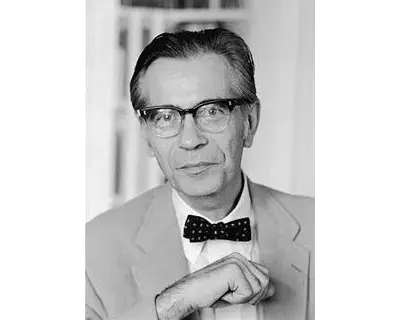
Richard Hofstadter was an American historian and public intellectual of the mid-20th century.
