Sinclair Lewis Quotes
Except for half a dozen in each town the citizens are proud of that achievement of ignorance which is so easy to come by. To be 'intellectual' or 'artistic' or, in their own word, to be 'highbrow,' is to be priggish and of dubious virtue.
There has always been in America a subpopulation which has distrusted intellectuals and educated people. The bias against intellectuals and well educated people ebbs and flows but it is always present. In this 1920 quotation the suspicion was there as today but did not have the name calling that tended to accompany this bias in the latter part of the 20th century and beginning of the 21st. Some of the bias is in reaction to a snobbishness that has been exhibited by some intellectuals, but the bias against intellectuals is generally strongest amongst the least educated groups in America. The South in particular has tended to have the weakest educational systems and institutions, and the vast majority of intellectuals were against the Southern racism and discrimination that used to prevail so extensively, and the vestige of anti intellectualism is still there despite the fact that the gap between Southern education and institutions is nowhere near as large as it used to be. Religious fundamentalists also are generally more distrustful of intellectuals as even where the intellectuals are religious they tend to be modernists and not fundamentalists. And of course, liberal and conservative intellectuals constantly accuse the other group of dominating the intellectual agenda.
Sinclair Lewis, 1885-1951, Nobel Laureate in Literature, Main Street, 1920
Sourced by: Eigen's Political and Historical Quotations


Even sophisticated societies have anti-intellectual movements. This happened in revolutionary France, but also at times even in the United States. In 2012, for example, Rick Santorum a candidate for the Republican presidential nomination called President Obama a “snob” for wanting to enable all students to go to college. Santorum was appealing to an anti-intellectual movement in the country that distrusted intellectuals as “elites.”


This may be one of the most anti-intellectual, anti educational statements made in the history of American campaigns. Santorum was one of 9 Republicans seeking the 2012 Presidential nomination. He was a favorite of the radical religious right which was an important constituency of the Republican Party at that time. The 9 candidates tried to outdo each other in how they could attack President Barack Obama, then running for a second term. While Obama had a very large percentage of Americans who “liked him” even when they disagreed with his policies, the right wing base of Republicans literally hated the man and would see evil in anything Obama did or said. One of the main positions of the President had been making college affordable for every American young person. Normally, this would be approved by almost all citizens and voters. However, this quotation illustrated the degree of hatred and paranoia. The audience, instead of laughing at the absurdity of Santorum’s accusation, roared its approval. There were not enough Republicans who shared the same degree of Paranoia about Obama, and Santorum was not elected as the nominee. There has always been in America a fundamentalist religious minority who feared college and higher eductation as not adhereing to the literal reading of The Bible, even when the colleges were Christian religious institutions which the early Ivy League colleges were: Brown, Yale, Princeton, Harvard and Columbia. As these schools have become secular, some religious fundamentalists opposed sending their children to them and saw the institutions in a negative light. Santorum’s constituency included those Americans.

He meant to say “repository” and not “suppository”. The latter is a capsule of medicine that is placed inside the rectum.


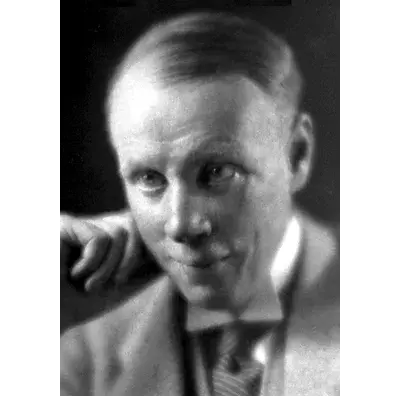
Harry Sinclair Lewis was an American writer and playwright. In 1930, he became the first writer from the United States (and the first from the Americas) to receive the Nobel Prize in Literature, which was awarded "for his vigorous and graphic art of description and his ability to create, with wit and humor, new types of characters." His works are known for their critical views of American capitalism and materialism between the wars. He is also respected for his strong characterizations of modern working women. H. L. Mencken wrote of him, "[If] there was ever a novelist among us with an authentic call to the trade ... it is this red-haired tornado from the Minnesota wilds."
