Lucretius Quotes
It is doubtful what fortune to-morrow will bring.
[Lat., Posteraque in dubio est fortunam quam vehat aetas.]
Lucretius. De Rerum Natura. Book III, line 1085.


While this was certainly true in Ancient times, modernity has given us Public Health and other techniques that now enable us to prevent accidents. Automobile safety from seat belts and air bags are good examples. From a political point of view, however, accidents can and often do control the political landscape as in the unexpected death of a national leader. Often natural disasters are included in the general term “accidents” where the meaning is taken as that which is beyond human control.


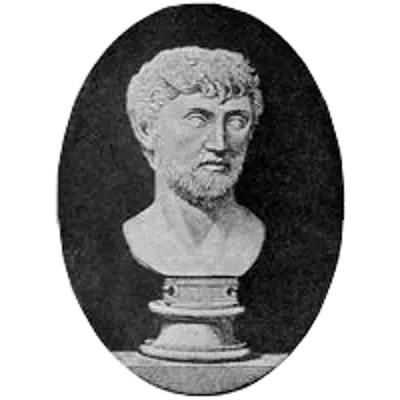
Titus Lucretius Carus (/ˈtaɪtəs luːˈkriːʃəs/ TY-təs loo-KREE-shəs, Latin: [ˈtɪtʊs lʊˈkreːtɪ.ʊs ˈkaːrʊs]; c. 99 – c. 55 BC) was a Roman poet and philosopher. His only known work is the philosophical poem De rerum natura, a didactic work about the tenets and philosophy of Epicureanism, and which usually is translated into English as On the Nature of Things. Lucretius has been credited with originating the concept of the three-age system that was formalised in 1836 by C. J. Thomsen.
