Chanakya Quotes
It is better to die than to preserve this life by incurring disgrace. The loss of life causes but a moment's grief, but disgrace brings grief every day of one's life.
Chanakya. Chanakya Niti-Sastra. Translated by Miles Davis, Bhaktivedanta Book Trust, 1981, p. 8.


This text, generally considered the most important of all the Hindu works is believed to be the guidance given by Lord Krishna, the most important of the God figures, to has friend and devotee Arjuna. It originally was an episode of the enormous Mahabharata, the history of the ancient world written originally in Sanskrit. The date is approximate and different scholars have dated it from 500 BC to 50 BC. The Bhagavad Gita is generally regarded as the most concise description of Hindu philosophy. For Christians this notion is not a general one although it has evolved very strongly outside of religion in some subcultures such as Spain. But for Islam and the Hindu religion this notion is an integral component of the religious philosophy.

In reference to the Fugitive Slave Law:


This dictum has driven blood feuds that have lasted over 200 years. It has also made governance and diplomacy in Northern Albania very difficult.
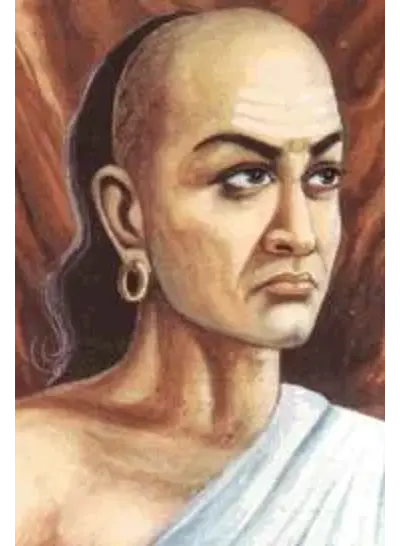
Chanakya (IAST: Cāṇakya, pronunciation (help·info)) was an ancient Indian teacher, philosopher, economist, jurist and royal advisor. He is traditionally identified as Kauṭilya or Vishnugupta, who authored the ancient Indian political treatise, the Arthashastra, a text dated to roughly between the 4th century BCE and the 3rd century CE. As such, he is considered the pioneer of the field of political science and economics in India, and his work is thought of as an important precursor to classical economics. His works were lost near the end of the Gupta Empire in the 6th century CE and not rediscovered until the early 20th century.
