Thomas Paine Quotes
It is always to be taken for granted, that those who oppose an equality of rights never mean the exclusion should take place on themselves.
Paine, Thomas. Dissertations on First Principles of Government. V. Pelicier, 1795.


Alluding to Congress's common practice of exempting itself and its members from many laws they impose on everyone else:


This is a classic generalization that has little validity if any. There is no typical white intellectual, just as there is no typical American or typical politician. And of the white intellectuals, there are very few who hold the two beliefs in the quotation. This type of absurd generalization is unfortunately too common.


The reason this quotation is important, it was the first time in American history that a President had tied racial discrimination to morality. Before that other Presidents had argued against segregation on pragmatic grounds or on legal, Constitutional grounds. Kennedy’s private moral declaration had a huge impact on Black leaders throughout the country who heard about it by word of mouth. That statement forged a bond between JFK and Blacks while most whites did not see anything striking in the statement.


Our Founding Fathers were divided into three general views about slavery. There were abolitionists for whom slavery was abominable and should be eliminated—these were mostly in the Northern States but with a few Southerners. Then there was the opposite view held by most Southerners, that slavery was not only a natural and moral institution but it was an economic and social necessity. Last were those like Laurens, George Washington and Thomas Jefferson. Slave owners who grew up with slavery as a norm but came to see its evils and the complexity of change and reform in that area.

[This was the first Abolition appeal written by a Black Man. It was published in Boston and despite the fact that it was very critical of whites, was very popular going through two more printings within the next two years.]


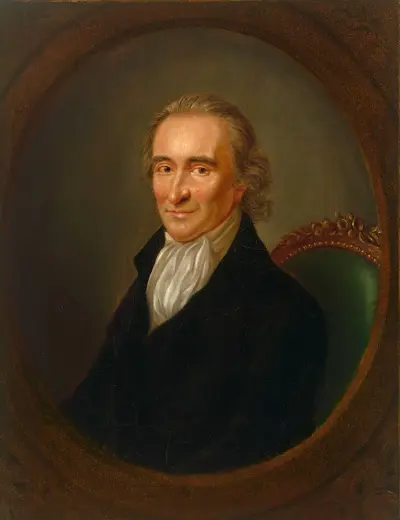
Thomas Paine was an English-born American political activist, philosopher, political theorist, and revolutionary. He authored Common Sense (1776) and The American Crisis (1776–1783), the two most influential pamphlets at the start of the American Revolution, and helped inspire the patriots in 1776 to declare independence from Great Britain. His ideas reflected Enlightenment-era ideals of transnational human rights. Historian Saul K. Padover described him as "a corsetmaker by trade, a journalist by profession, and a propagandist by inclination".
