John F. Kennedy Quotes
It is a paradoxical truth that tax rates are too high and tax revenues are too low and the soundest way to raise the revenues in the long run is to cut the rates now Cutting taxes now is not to incur a budget deficit, but to achieve the more prosperous, expanding economy which can bring a budget surplus.
Kennedy, John F. "Address to the Economic Club of New York." 14 Dec. 1962, New York. Public Papers of the Presidents of the United States: John F. Kennedy, 1962, U.S. Government Printing Office, 1963, p. 881.


Advocating canceling one year of the tax cuts for the wealthiest people to pay for the Iraq War.


The traditional conservative tax principle has always been that low tax rates are needed to produce economic expansion and in general this had been so until Clinton and Rubin combined higher tax rates with great fiscal discipline of government spending and low interest rates, not only produced a great economic expansion but eliminated the Reagan deficit and left office with a huge projected surplus.


This is the most articulate historical statement of the modern conservative mantra regarding taxes. However, one change has taken place. The words “necessarily” and “often” tend to be left out of the more modern ideological statements. Mellon’s original statement has never really had any politicians or economists who disagreed. Politicians of all economic persuasions have generally accepted the Mellon statement but the extreme conservatives’ creed is that a lowering of taxes always produces more revenue and a tax increase will inevitably lead to greater tax revenue—a position which Mellon never took. Mellon however was very solicitous of the wealthy, felt the welfare of the nation depended on their prosperity, and was a strong advocate of what was later called ‘trickle down’ economics {628592}.

See {619116}. for a related idea of his.

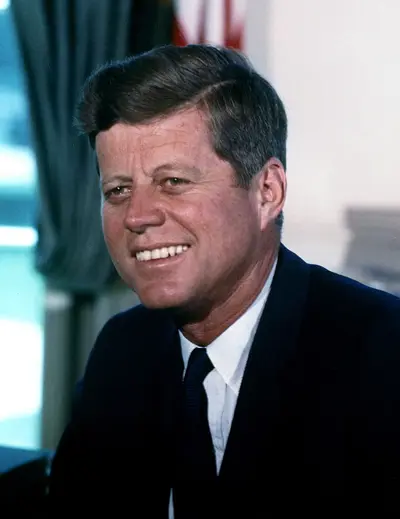
John Fitzgerald Kennedy, often referred to by his initials JFK, was an American politician who served as the 35th president of the United States from 1961 until his assassination in 1963. Kennedy served at the height of the Cold War, and the majority of his work as president concerned relations with the Soviet Union and Cuba. A Democrat, Kennedy represented Massachusetts in both houses of the U.S. Congress prior to becoming president.
