Evo Morales Quotes
It has been demonstrated that the coca leaf does no harm to human health.
Bolivians routinely drink coca tea and chew coca leaves, especially in the high altitudes of the country. The tea and leaf chewing provides a very small dose of the active ingredients and is not very dangerous compared with using the powdered form of cocaine which is not only habituating but has been fatal to some users.
Evo Morale President of Bolivia, Speech to the United Nations, September 2006
Sourced by: Eigen's Political and Historical Quotations


The cocoa plant produces leaves which the Bolivian Indians have been chewing for centuries as mild stimulant and assuager of hunger pangs. However with Western chemistry, the cocoa leaves can be turned into cocaine. The Cocoa crop has a ready market domestically and a hugely inflated profit for exports to the illicit drug trade. The United States has put pressure on Bolivian politicians to make growing of the cocoa plant illegal, and has supplied the chemicals and the funds to destroy the cocoa crop wherever they find it growing. This angers small peasant farmers for whom this is the most profitable crop and one of the few on which they can even grow in much of the country; it also angers the vast majority of the Indian population—about half the country—as they are pressured to give up chewing cocoa. The Indians have virtually no harmful effect from chewing cocoa leaves and say that the problem is with the Gringos who are drug users and cannot control themselves. Why should they give up their preferences, traditions and customs because the North Americans are irresponsible and cannot control themselves? Chavez, the first ethnic Indian President of Bolivia took the position that the peasants and peasant farmers should not have to sacrifice to benefit the rich Americans and others in the world. America has a prevention and education problem and Americans should stop buying the cocaine—a product on which the Bolivian Indians make almost nothing; they would be happy just growing leaves for the domestic market.


British merchants and the East India Company made huge profits from the drug trade buying opium in India and selling it to China where it had become immensely popular. But when the Chinese (led by Lin Zexu) tried to ban the import of opium, the British fought two wars with China to force the reopening of the opium trade. At the end of the 20th century, some referred to England and the English Crown as the largest Drug Cartel in history.

In 1839 opium was the leading commodity internationally traded in the world. The Chinese told the foreign opium merchants to cease trade in China. When they refused the Chinese dumped the opium into the river. English opium merchants demanded that Parliament force the Chinese to make restitution even if it meant war. Parliament agreed and started the Opium War. Gladstone, then an MP was one of the few who took the Chinese side when addressing the traders.


In 1864 Mariani combined Bordeaux wine with cocaine and sold the mixture throughout the world. For over 50 years it was a leading consumer product in Europe and the United States. President William McKinley was a user and praised the product. Two popes conferred the title of "Benefactor of Humanity" upon Mariani for his invention.


Central Intelligence Agency. The MKULTRA scandal involved testing LSD on unwitting American subjects. Under the influence of the powerful drug people did all kinds of unwholesome and illegal things with the CIA agents observing and in some cases participating. Several American citizens suffered permanent damage.

Watchtower Bible and Tract Society of New York. Alcohol is medically and scientifically a drug and an addicting drug at that. The Jehovah's Witnesses also shun alcohol for that reason.
Opium addiction was ravaging Chinese society and the British were very large opium traders with most of the Chinese market. The moral and ethical argument fell on deaf ears and the British continued to sell opium to China. While it is hard to understand the British position today, consider the export sales of American cigarettes to the third world. A few countries have tried to legislate limits and restrictions and our State Department has kept all these markets open by threatening to restrict sales to the U. S. from those countries. The “logic” is that if the U. S. stopped exporting cigarettes, then the French or other country would move into the market or the local businesses would take over the cigarette trade. And cigarettes are far more lethal than opium. The British businessmen were convinced that there would be no reduction of use—the only difference would be who profits from the opium. A few years later the Opium Wars ensued.

Lister only compared opium in its then usual form. Stronger opiate derivatives such as Heroin and morphine were not studied by him at the time.

At the time, few New Yorkers would believe that 40 years later, cocaine—in its new form of crack as well as its classic form—would be the biggest drug problem in the city.

This was before the Harrison Act was passed making certain drugs illegal to sell without a prescription. Before that Heroin and Cocaine were sold regularly. See {606296}.
He was the first Chinese official to make opium illegal. However, British many merchants were involved in a complicated trade scheme whereby they brought opium to Canton. They paid not attention to the new laws against opium the same as their Chinese customers. Lin Zexu, perceiving Queen Victoria to have powers equivalent to the Chinese Emperor who could do anything in China, He assumed that the Queen could and would control the merchant’s behavior, and before punishing the British merchants, he was putting the Queen on notice. There is no record of what Victoria did, if anything. When Lin Zexu tried to enforce his ban on opium, the British Merchants resisted and the First Opium War broke out between China and Britainin which the Chinese were humiliated and resent to this day. A bronze statue of Lin Zexu was erected in his honor in Chatham Square (Kimlau Square) of New York City's Chinatown.
That was certainly true at that time in the United States. Marijuana was illegal, but alcohol and nicotine—cigarettes—were legal. Yet, over 350,000 deaths a year were caused by nicotine, over 100,000 alcohol related death the epidemiologists had found. But the number of marijuana caused death was just a handful, although there were hunreds of deaths of drug dealers fighting for territory, Nicotine an alcohol science had proved was addicting. Not so for marijuana which for some people was habituating, but marijuana never met the scientific criteria for addiction.

He was opposed to the use of illicit drugs when most writers claimed that drug taking opened new vistas. Koestler, a Hungarian Jew, lived and worked in England for most of his life. He was not only a great writer, but was an amateur scientist.
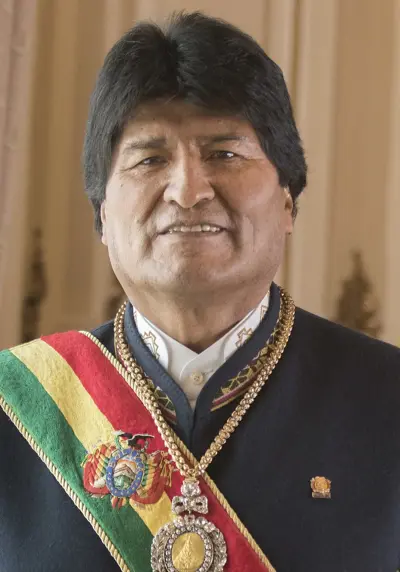
Juan Evo Morales Ayma is a Bolivian politician and former cocalero activist who served as the 65th President of Bolivia from 2006 to 2019. Widely regarded as the country's first president to come from its indigenous population, his administration focused on the implementation of leftist policies and combating the influence of the United States and multinational corporations. Ideologically a socialist, he has led the Movement for Socialism (MAS-IPSP) party since 1998.
