Collis Potter Huntington Quotes
It cost money to fix things so that I would know his bill would not pass. I believe that with $200,000, I can pass our bill.
$200,000 then was the equivalent of well over $10 million today, and this is about what it costs a company in lobbyists fees and Congressional Campaign Contributions to get a bill passed in the current political environment.
Collis P. Huntington, 1821-1900, President, Southern Pacific Railroad, Letter to his associate, January 17, 1876
Sourced by: Eigen's Political and Historical Quotations

Sometimes the costs of the bribes was too great an investment for the likely year. Bribery decisions were made with the same sort of analysis as buying land or a piece of capital machinery. Just business.
Bribing Congressmen was quite common. In those days, money to Congressmen and Senators was not even disguised as campaign contributions. The letters were the short terms for the different agents.
Huntington and his associates were used to bribing Congressmen to vote for favorable railroad legislation.

He was referring to his practice of distributing shares of stock to other congressmen on behalf of Credit Mobilier and Union Pacific. Ames was censured by the Congress in 1872, for "seeking to procure congressional attention to the affairs of a corporation in which he was interested.” The cartoon to the left is from the period showing all the congressmen getting their piece of the Mobilier Credit cake.


What is fascinating about this quotation is that although the head of a religion, Smith was not advocating the kinds of personal lifestyle issues of his church the way modern religious leaders do, but was concerned with the much larger issues of expansionism, corruption of the courts and judiciary, and land distribution. He was a classic reform candidate in that sense. Smith had written to most of the then likely Presidential candidates of both major parties asking for their position on the Mormons who were facing persecution wherever they went. None of the politicians would make any satisfactory commitments. Smith took Direct Action and became the only major religious official to have run for the Presidency of the United States until Pat Robertson tried and failed in 2000. Smith’s assassination shortly thereafter cut his run for the Presidency short before it made much headway and politically he had no chance to affect the race.


The bill went down to a narrow defeat, but the Republican leadership of the House held the vote open for a record setting 3 hours, until they could persuade enough members to reverse their vote. After the 3 hours, the bill passed by one vote. The House Ethics Committee did not see that as sufficient reason to start an ethics investigation.
Huntington and many others regularly bribed state legislators as well as members of Congress.


The George W. Bush administration was trying to get its prescription drug plan through the House, but when the voting time ran out they did not have enough votes. The Republican leadership, for the first time in American Congressional history would not let the vote end and kept it open for another 3 hours while they persuaded some members to switch their vote. Smith was one of those. He had announced his retirement and his son was running for his seat. Tom Delay promised to support and campaign for his son, if Smith would switch his vote. Cunningham who was being given funds from companies, threatened to finance an opponent and hurt his son’s chances. In addition Cunningham was taking large bribes to steer contracts to incompetent contractors.

Hollings who was one of the senior experienced senators was offended by the degree to which the George W. Bush Administration and the Republican leadership had turned to lobbyists to draft legislation and amendments to pending legislation. Lobbyists often have specialized information that members of Congress do not have, so there has been in modern times communications between lobbyists and members of Congress and their staffs. However, during the Bush Presidency the practice reached an extreme where lobbyists would even write the legislative language and give it to the members in whom they had invested by giving them large campaign contributions and many perks. K Street is the fanciest street in Washington DC with some of the most expensive office space. A substantial proportion of the lobbyists have K Street offices, hence the metaphor.


Abramoff had bribed over 100 Congressional offices by a combination of campaign donations, paid golf junkets all over the world, free elegant meals at his own fancy Washington Restaurant, free tickets for the Congressmen, their staffs and their major constituents, to Concerts and sporting events including his own Skyboxes, and promises of future employment at very high salaries. Ironically, we was convicted of cheating some of his lobbying clients and did a jail term, but his “bribery” was technically usually legal. In addition to Abramoff, only one Congressman was charged and convicted of corruption, when many if not most had engaged in these corrupt practices. Congress makes the rules with loopholes so that what is bribery and corruption in any other setting is often not against the law if Congress is involved.


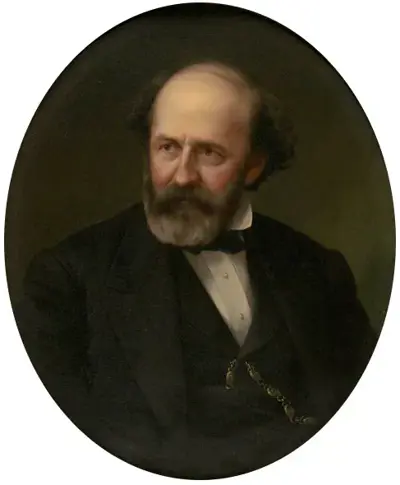
Collis Potter Huntington was an American industrialist and railway magnate. He was one of the Big Four of western railroading (along with Leland Stanford, Mark Hopkins, and Charles Crocker) who invested in Theodore Judah's idea to build the Central Pacific Railroad as part of the first U.S. transcontinental railroad. Huntington helped lead and develop other major interstate lines, such as the Southern Pacific Railroad and the Chesapeake & Ohio Railway (C&O), which he was recruited to help complete. The C&O, completed in 1873, fulfilled a long-held dream of Virginians of a rail link from the James River at Richmond to the Ohio River Valley. The new railroad facilities adjacent to the river there resulted in expansion of the former small town of Guyandotte, West Virginia into part of a new city which was named Huntington in his honor.
