Stephen M. Schwebel Quotes
Israel has better title in the territory of what was Palestine, including the whole of Jerusalem than do Jordan and Egypt
Stephen M. Schwebel, Judge & Legal Adviser, Department of State, President, International Court of Justice in The Hague, Executive Director of the American Society of International Law, President of the Administrative Tribunal of the International Monetary Fund, "What Weight to Conquest," American Journal of International Law, 1970
Sourced by: Eigen's Political and Historical Quotations


A minority of Jewish Israelis do not recognize the United Nations 1949 partition boundaries of the land creating modern Israel. They believe that God gave all the land to the Jewish people—as described in the Bible. Therefore, to them, the West Bank is a part of Israel. No Israeli government has ever maintained that position. However some governments which depend on settler and ultra-Orthodox support do not publicly disavow the position. Palestinians, look with alarm, on this view and the constant attempts at encroachment on West Bank land that the settlers attempt. Like the extremist Palestinians who want to sabotage any two-state solution, there is a minority of Israelis who do the same. These two groups made the peace process very difficult as their adherents are not only very passionate about their views, but have political influence out of proportion to their relatively small number of voters.


In the complicated and arcane Middle East, substantial majorities of Israelis and Palestinians both favored a two state solution, thus creating a Palestinian State out of the West Bank and Gaza. However, the Hamas terrorist organization won the majority of seats in the Parliament and formed the “government” of the Palestinian Authority. Hamas opposed Israel’s right to exist at all, as that position as well as virulent Anti-Semitic threats to all Jews in the world. Many called for Hamas to change their charter and crease their opposition to the right of Israel to exist. The President of the Palestinian authority called for new elections but Hamas refused. Thus Blair and other diplomats the world over were in a very difficult situation.


To make matters worse for the Muslims, the tiny foreign entity in their midst—populated by "heathens who do not follow the command of God"—have created a much higher standard of living for their people, improved the land and its productivity in ways that have been far superior to traditional Islamic methods, reclaimed much of the desert that the Muslims could not, and produced a military that has staved off the hostilities of all of Islam, and has done all this without any oil or other natural resources to sell. Israel is a living counter-example to the superiority of Islam and its traditions which is so important to Muslims.


The “radicals” refer to the extremely conservative, religiously-oriented Israelis. To them the only real and important element is the land that God gave to the Jewish people. They see the State as artificial and whose only legitimate role is to protect and defend the land of Israel. God has ordained the laws in the Talmud—the first 5 Books of the Old Testament. They do not believe in democracy but seek a Hebrew Theocracy of the Ancient Jews before they made the error of having kings. Some of them opposed the civil government of Israel when the country was founded via a UN resolution and a few would not even defend the new country under a civil government. The relative moderates see Israel as a nation state where the land of Israel can be changed, negotiated, traded as other nations do with their borders. One irony is no one knows exactly the borders of the land which God gave to the Jews and this is why archeology is so politically important in Israel compared to other countries.


The Temple Mount in Jerusalem is the base on which the Great Jewish Temple was erected. The temple was destroyed by the Romans. Hundreds of years later the Muslims built a mosque which the Prophet Muhammud himself is believed to have transported to. One side of the Temple Mount is the Wailing Wall, the holiest place on Earth for Orthodox Jews. When the Arabs controlled Jerusalem, they would not allow any Jews to pray at the Wailing Wall. When the Israelis gained control of the holy city they were more reasonable. They ceded day to day control of the Temple Mount—the top and the Mosque—to the Muslims and since then Jews have prayed at the side of the Mount and Muslims on the top. However there has been some friction about the archeology of the interior of the Mount itself. And some Muslims resent the fact that Israel controls the security and access to one of their holiest Mosques, and that in the event of some transgression in the Mount, Israeli civil law controls and not Islamic religious law—Sharia. Some permanent agreement will have to be made if there is to be an overall peace.


It was speeches like this which created a distrust of the Palestinian intentions when there were negotiations of land for peace. Worry that peace was just a pretext for war or takeover, inhibited many Israelis from wanting to give up anything unless they could get a more reliable partner. The Palestinians had a traditional fertility rate that was several times that of the Israelis.
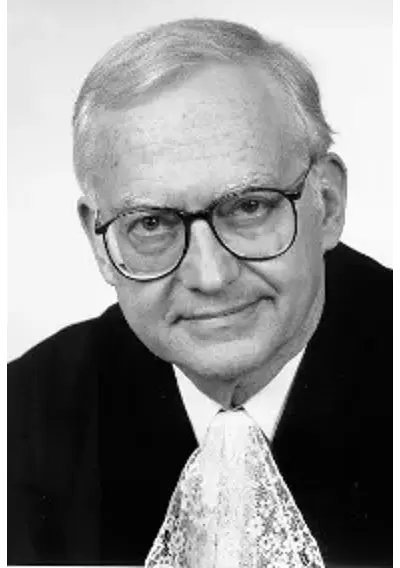
Stephen Myron Schwebel, is an American jurist, counsel and independent arbitrator. He serves as Judge of the World Bank Administrative Tribunal and as a member of the U.S. national group at the Permanent Court of Arbitration. Previously, he served as President of the World Bank Administrative Tribunal (2010–2017), as President of the International Monetary Fund Administrative Tribunal (1993–2010), as President of the International Court of Justice (1997–2000), as Vice President of the International Court of Justice (1994–1997) and as Judge of the International Court of Justice (1981–2000). Prior to his tenure on the World Court, Judge Schwebel served as Deputy Legal Adviser to the U.S. Department of State (1974–1981) and as Assistant Legal Adviser to the U.S. Dept. of State (1961–1967). He also served as a professor of law at Harvard Law School (1959–1961) and Johns Hopkins University (1967–1981). Judge Schwebel is noted for his expansive opinions in momentous cases such as Legality of the Threat or Use of Nuclear Weapons, Military and Paramilitary Activities in and Against Nicaragua and Oil Platforms (Islamic Republic of Iran v. United States of America).
