Stanislaw Jerzy Lec Quotes
Is it progress if a cannibal uses a fork?
Lec, Stanislaw Jerzy. Unkempt Thoughts. Translated by Jacek Galazka, St. Martin's Press, 1962.

Ingersoll was considered to be the greatest orator and political thinker of his day, but his overt atheistic views curtailed his elected political career.


This was a radical speech for the time, suggesting reforms that had been unthinkable to most Turks. Although it is not prohibited by the Koran and early Islamic artists made some of the greatest paintings and depictions of people, fundamentalists gained control of Islam and interpreted any statue as an idol that could be worshipped and this generalized to Islamic art in general where people ceased to be depicted and even animal depictions were rare. Muslim art developed incredible geometric intricacy but tended not to depict anything that is real. This extended to photography and illustrations in books including textbooks. At the same time, not unlike some Christian and Jewish Fundamentalists, the Muslim fundamentalists opposed science and the teaching thereof on the grounds that all authentic knowledge was in the Koran and anything else was not only false but also heretical. So this speech was a type of “declaration of war” against the established religious order and culture.


In 1925 his administration had passed a law banning the wearing of the traditional Muslim hat.


After Turkey’s defeat in WWI, some Turkish leaders like Riza Nur wanted Turkey to become a colony of America. This they believed would hasten Turkey’s development and modernization.


This is a remarkable insight into public health. By the late 20th century, most preventable death in America is a function of individual habits and choices: diet, dangerous driving, smoking, drinking and the like. Few physicians of Blackwell’s day realized this was coming.


See {629123} for another of Emerson’s definitions of Civilization.

The “brother of the wolf” refers to the evolution of the dog from the wolf which it now appears took place in just a relatively few generations.

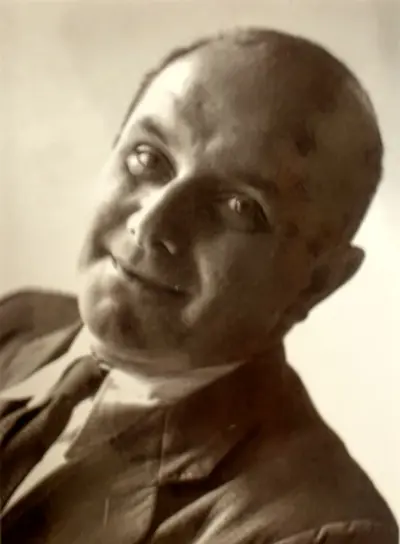
Stanisław Jerzy Lec, born Baron Stanisław Jerzy de Tusch-Letz, was a Polish aphorist and poet. Often mentioned among the greatest writers of post-war Poland, he was one of the most influential aphorists of the 20th century, known for lyrical poetry and skeptical philosophical-moral aphorisms, often with a political subtext.
