Aristotle Quotes
Irrational passions would seem to be as much a part of human nature as is reason.
Aristotle. Nicomachean Ethics. Translated by W. D. Ross, Clarendon Press, 1908, p. 55.


This is a common phenomenon in most democracies. There are 3 reasons that people vote against their interests. One is that they are fooled by the slickness of particular candidate and/or promises and assurances. Second, their cultural values are offended by the candidate who advocates and will fight for their interests. Third, they have been frightened sufficiently that they will sacrifice their interests if that will protect them. One frequent example is that in America in all wars, many people have voted for the candidate or party who would erode and/or deny their civil rights in the name of national security.


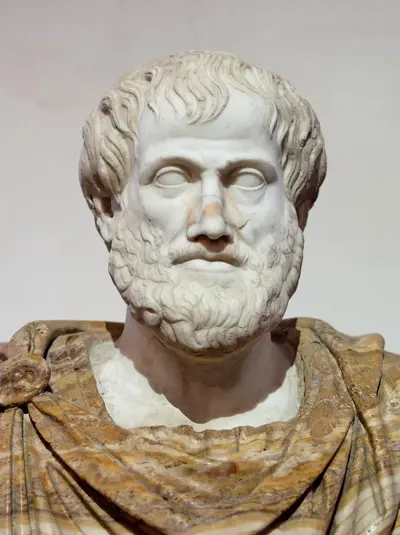
Aristotle (/ærɪˈstɒtəl/; Greek: Ἀριστοτέλης Aristotélēs, pronounced [aristotélɛːs]; 384–322 BC) was a Greek philosopher and polymath during the Classical period in Ancient Greece. Taught by Plato, he was the founder of the Lyceum, the Peripatetic school of philosophy, and the Aristotelian tradition. His writings cover many subjects including physics, biology, zoology, metaphysics, logic, ethics, aesthetics, poetry, theatre, music, rhetoric, psychology, linguistics, economics, politics, meteorology, geology and government. Aristotle provided a complex synthesis of the various philosophies existing prior to him. It was above all from his teachings that the West inherited its intellectual lexicon, as well as problems and methods of inquiry. As a result, his philosophy has exerted a unique influence on almost every form of knowledge in the West and it continues to be a subject of contemporary philosophical discussion.
