Gabriel Garcia Marquez Quotes
Invulnerable to time, dedicated to the messianic happiness of thinking for us, knowing that we knew that he would not take any decision for us that did not have our measure, for he had not survived everything because of his inconceivable courage or his infinite prudence but because he was the only one among us who knew the real size of our destiny.
García Márquez, Gabriel. The Autumn of the Patriarch. Translated by Gregory Rabassa, Harper & Row, 1976.


As an educational and military leader, he saw the importance of each in a nation’s welfare.

An example of this was the landing in the beaches of Normandy in WWII. Once on the beaches the allied troops had to win or die. Some of the most heroic fighting in American and English military history occurred on those beaches. Another was the Spanish Explorer Hernando Cortez who after landing in the New World, had his ships burned so that he and his soldiers had to conquer or they would die.

This is one of the great statements of political leadership ever produced. However, successive leaders of Pakistan saw themselves in this mold, but the people did not follow them and Pakistan degenerated into a succession of dictatorships after Jinnah died.


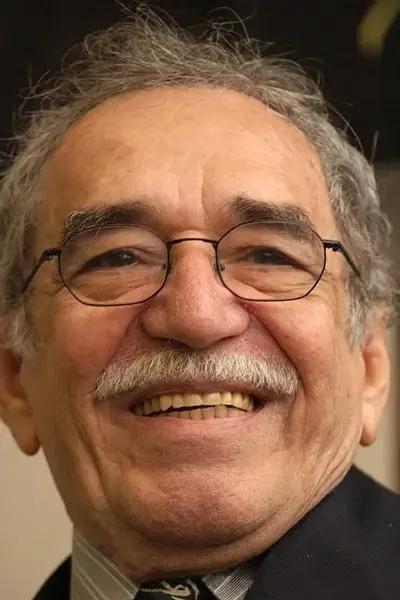
Gabriel García Márquez was a Colombian novelist, short-story writer, screenwriter, and journalist, known affectionately as Gabo [ˈɡaβo] or Gabito [ɡaˈβito] throughout Latin America. Considered one of the most significant authors of the 20th century, particularly in the Spanish language, he was awarded the 1972 Neustadt International Prize for Literature and the 1982 Nobel Prize in Literature. He pursued a self-directed education that resulted in leaving law school for a career in journalism. From early on he showed no inhibitions in his criticism of Colombian and foreign politics. In 1958 he married Mercedes Barcha; they had two sons, Rodrigo and Gonzalo.
