Jean Baudrillard Quotes
Information can tell us everything. It has all the answers. But they are answers to questions we have not asked, and which doubtless don't even arise.
Baudrillard, Jean. Cool Memories IV, 1995-2000. Translated by Chris Turner, Verso, 2003, p. 55.


Thomas Stearns Eliot


Bush had advised FDR to go ahead with the research and development program to try and develop an atomic bomb. He was the only Government Official who Roosevelt discussed the idea with. At the time, Bush as a government official supervised and directed many thousands of scientists, and was one of just a few scientists who monitored and advised on the Manhattan Project to develop the Bomb. Here he is one of the first people to notice, understand and articulate the dilemma of specialization in science. To the degree it was a problem in 1945, it became a geometrically greater problem 65 years later satellites were capturing more high resolution of the universe every week than all the astronomers in the world could examine in a year. Ironically, Bush called for a type of precursor to the Internet to cope with this problem which the Internet helped with. Using computers to observe and analyze the many images helped much but all of science became weighed down with this problem of specialization and the explosion of knowledge.

As it advanced we discovered that there is no perfection and that each new understanding and insight raises many more questions. The 20th century just exploded man’s knowledge.


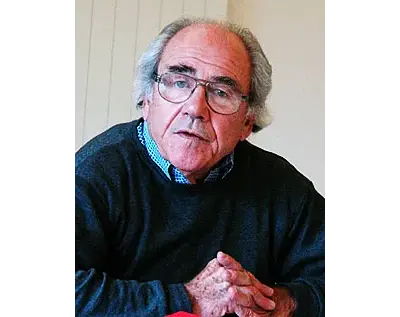
Jean Baudrillard was a French sociologist, philosopher and cultural theorist. He is best known for his analyses of media, contemporary culture, and technological communication, as well as his formulation of concepts such as simulation and hyperreality. He wrote about diverse subjects, including consumerism, gender relations, economics, social history, art, Western foreign policy, and popular culture. Among his best known works are Seduction (1978), Simulacra and Simulation (1981), America (1986), and The Gulf War Did Not Take Place (1991). His work is frequently associated with postmodernism and specifically post-structuralism.
