A. P. J. Abdul Kalam Quotes
India must achieve the real goal?that is energy independence or an economy which will function well within total freedom from oil, gas or coal imports.
Kalam, A. P. J. Abdul. Address to the Nation on the Eve of 59th Independence Day. 14 Aug. 2005.


Actually, there were several purposes in the legislation creating the Department of Energy, albeit energy independence was one of the primary ones. However, the Department’s activities have been controlled by Congress and the various administrations. Neither of these two branches of our government has been willing to allow and/or require the Energy Department to do what is necessary to obtain energy independence, Each step in that direction is opposed by powerful interests and so this has been gridlocked.


His assertion that wind energy is less expensive than the fossil fuel alternative is not accurate if one accounts for the costs on the basis of conventional accounting methods. It was at that time more expensive which is why it’s use was limited. However, the existing methods of accounting did not charge the fossil fuels for the environmental degregation that they cause and the cost to society to overcome these or live with them. More important there is no charge to the cost of fossil fuels for the deleterious health effects that their extraction and use cause. Global warming / climate change is not considered at all in the economic analysis.


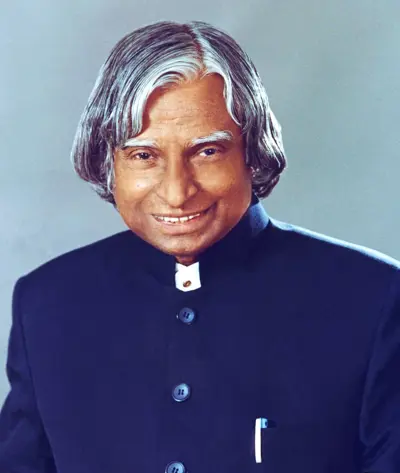
Avul Pakir Jainulabdeen Abdul Kalam was an Indian aerospace scientist and politician who served as the 11th President of India from 2002 to 2007. He was born and raised in Rameswaram, Tamil Nadu and studied physics and aerospace engineering. He spent the next four decades as a scientist and science administrator, mainly at the Defence Research and Development Organisation (DRDO) and Indian Space Research Organisation (ISRO) and was intimately involved in India's civilian space programme and military missile development efforts. He thus came to be known as the Missile Man of India for his work on the development of ballistic missile and launch vehicle technology. He also played a pivotal organisational, technical, and political role in India's Pokhran-II nuclear tests in 1998, the first since the original nuclear test by India in 1974.
