Muhammad Ali Jinnah Quotes
India is not a nation, nor a country. It is a subcontinent of nationalities.
Jinnah, Muhammad Ali. Speeches and Writings of Mr. Jinnah. Edited by Jamil-ud-Din Ahmad, Vol. 1, Sh. Muhammad Ashraf, 1942, p. 122.


Tito did not realize how right he was. The class issues were relatively easy to resolve into a unified nation, but the ethnic, national, and religious difference and historical hatreds and conflicts were held together during Tito’s lifetime, as he was a very strong leader committed to multiculturalism and imposed it on all of Yugoslavia. However, when he did in 1980, Yugoslavia rapidly flew apart into ethnocentric independent cultures which then went to war with each other.


There are two ethnic groups in Fiji. The indigenous Fijians and immigrants from India and their descendants. The Indians originally came to trade and represent a globalized, mercantile culture whereas the indigenous tribes did not have the tradition of business. Over time, the minority Indians were economically more successful than the majority, which tended to resent the Indians. As the Indians were the political minority with no strong tradition of protection of minority rights, they became victims of discriminatory behavior in a nation where the traditional political structure of tribal chiefs and tribes dominated politics. Religion also separated the Hindu Indians from the Christian tribals. In the early 21st century, an Indian was elected prime minister, but this led to a revolt and coup by some traditional tribals. Finally the coup was put down but the society had been split apart and there was continuous argument over rights and whether the coups plotters should be punished.

This mode of national definition is characteristic of many nations of Europe as well.


Islamic modernists like him are many among the educated Muslims but their views are often drowned out by the violence and extremist statements of the fundamentalists.
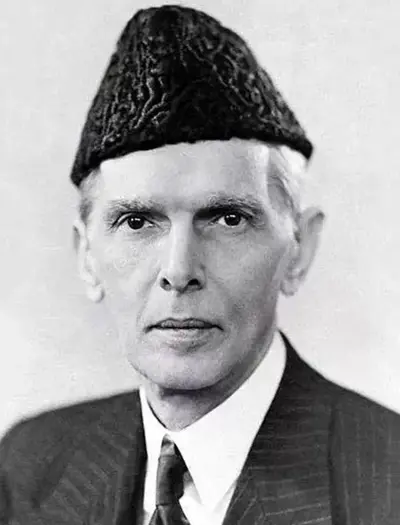
Muhammad Ali Jinnah was a barrister, politician and the founder of Pakistan. Jinnah served as the leader of the All-India Muslim League from 1913 until the inception of Pakistan on 14 August 1947, and then as the Dominion of Pakistan's first Governor-General until his death. He is revered in Pakistan as the Quaid-i-Azam ("Great Leader") and Baba-i-Qaum ("Father of the Nation"). His birthday is observed as a national holiday in Pakistan.
