Winston Churchill Quotes
India is a geographical term. It is no more of a united nation than the equator.
Winston Churchill, 1874-1965, British Prime Minister (Conservative), Speech, March 18, 1931
Sourced by: Eigen's Political and Historical Quotations


He persuaded many other rulers to join the Indian Union when India became Independent.
Ali was arguing that India should not be a single nation but each major ethnic group should have its own country. Pakistan was later to be separated out. However, the Akhoots, Christians, Dravidians and Sikhs did not have the same desire for separatism as the Muslims and stayed in India, and today India is a pluralistic nation which even includes about the same number of Muslims who have elected to be Indian citizens rather than Pakistani.

Even in modern times many politicians the world over agree with Davis’s point that for a government to function well, the nation must have a homogenous citizenship. This is especially true of dictatorships where control of a uniform culture and populous is easier than if it is diverse nation. In modern times, the three greatest economic and scientific powers, the United States, The Soviet Union, and China were and are multicultural societies with different ethnicities, races, religions, and cultures among their sitizenry.


His views are a mix of modernism and fundamentalism. He favors democracy and elections but also favored the Taliban destroying the great ancient Buddha statues when he was called an idol worshipper for urging the preservation of art.

The eventual demise of the French Colonial Empire was predicted by almost all scholars and statesmen except the French. It would be after the Second World War when the French were proved to have been delusional on this point.


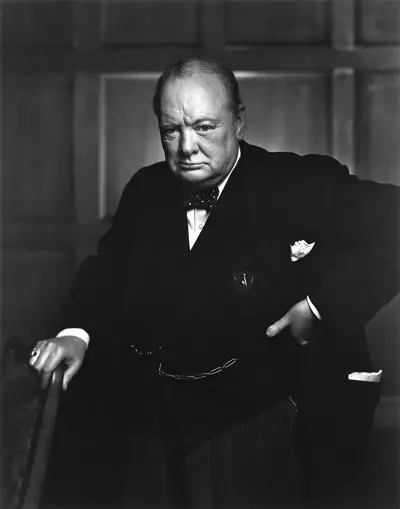
Sir Winston Leonard Spencer Churchill, KG, OM, CH, TD, DL, FRS, RA was the Prime Minister of the United Kingdom from 1940 to 1945, during the Second World War, and again from 1951 to 1955. Apart from two years between 1922 and 1924, Churchill was a Member of Parliament (MP) from 1900 to 1964 and represented a total of five constituencies. Ideologically an economic liberal and imperialist, he was for most of his career a member of the Conservative Party, as leader from 1940 to 1955. He was a member of the Liberal Party from 1904 to 1924. Churchill was also well known for his military career and as a historian, painter and writer, and among his many awards was the Nobel Prize in Literature.
