Joseph Rotblat Quotes
Indeed, the whole human species is endangered, by nuclear weapons or by other means of wholesale destruction which further advances in science are likely to produce.
Rotblat, Joseph. "Remember Your Humanity." Les Prix Nobel: The Nobel Prizes 1995, edited by Tore Frängsmyr, Nobel Foundation, 1996.


For a similar view from the eyes of an American, see Pearson {612242}.


The background of the statement was Iraq and Saddam Hussein.


This is one of the earliest uses of the phrase “weapons of mass destruction.” Panneloek quoted it in 1948, so it was used by Urey before then.


This quotation represents a colossal failure of politicians to understand science and the way that it works. They assumed that the processes and methods were secrets that if kept secret, would prevent others from constructing an atomic bomb. The reality was that the most important “secrets” had emanated from Einstein’s Theory of Relativity and other published scientific papers. So any competent physicist knew immediately how the bomb worked. A triggering mechanism would need to be developed but that was just a complicated engineering project. The largest barrier was the supply of enough radioactive material with sufficient purity. That then (as today) took a lot of money and some time. But after the initial bomb, the secrets might speed things up but were not necessary. That is why the French and the Russians quickly developed their bombs, and why it did not take the Israelis long once the had decided to invest the resources. China, India and Pakistan did not need the secrets either when much later, they decided to develop nuclear weapons. With the atomic bomb, spying and obtaining secrets shorten the required time and reduce the cost, but are not necessary. This is why nuclear proliferation is so hard to stop.


At the time Iran was claiming that its nuclear program was for atomic energy only.


Because North Korea was at the time such a closed and paranoid dictatorship, that few in the West had ever even negotiated with the North Korean leadership and the press has no opportunity to report on it. Albright was one of the few people who actually negotiated with the North Koreans.


This prediction was sadly terribly accurate. Nuclear terrorism is a realistic threat at the millennium. Pannekoek was one of the first to predict it.
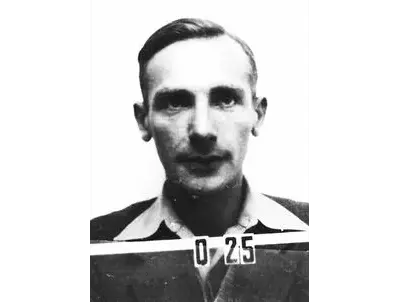
Sir Joseph Rotblat KCMG CBE FRS was a Polish physicist, a self-described "Pole with a British passport". Rotblat worked on Tube Alloys and the Manhattan Project during World War II, but left the Los Alamos Laboratory after the war with Germany ended. His work on nuclear fallout was a major contribution toward the ratification of the 1963 Partial Nuclear Test Ban Treaty. A signatory of the 1955 Russell–Einstein Manifesto, he was secretary-general of the Pugwash Conferences on Science and World Affairs from their founding until 1973 and shared, with the Pugwash Conferences, the 1995 Nobel Peace Prize "for efforts to diminish the part played by nuclear arms in international affairs and, in the longer run, to eliminate such arms."
