Alan Greenspan Quotes
Increased jobs are the consequence of increased trade. Increasing jobs more than output implies a fall in productivity and standards of living. That surely cannot be our goal.
Greenspan, Alan. "Global Economic Integration." Speech at the Federal Reserve Bank of Kansas City Economic Symposium, Jackson Hole, WY, 24 Aug. 2001.

Whitaker was right bet at that time his advice was not heeded. When Ireland late in the 20th century finally acted on his advice and eliminated almost all of their protectionism, the economy thrived and not only did the Irish emigration stop, but people began to immigrate to Ireland for the economic opportunity.


Foreign trade creates jobs and eliminates jobs. The people who lost jobs as the result of increased foreign trade are readily identified while the job beneficiaries may never know the reason. So it is a hard political sell even though most of the economic studies have showed that more jobs of more value are created by trade than lost. However, the losers are generally blue collar workers while the beneficiaries are generally white collar and knowledge workers. So there is a socioeconomic class differentiation in the trade issue.

the Bolshevik Communists of Russia Zenzinov was often a critic of the Bolsheviks.


Although aggregate employment has remained relatively stable as global free trade has become the U. S. policy, there has been major employment disruption with some types of people benefiting and others like blue collar manufacturing workers having their entire careers wiped out. Port cities like Seattle, Baltimore have boomed while Midwestern manufacturing cities have deteriorated greatly.


The good jobs that support middle and upper middle class lifestyles are growing at a lesser rate than the minimum and low wage jobs.


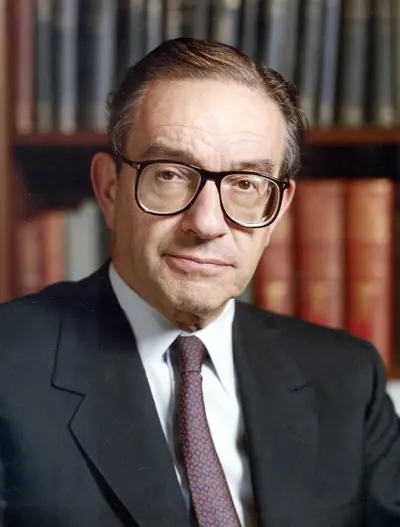
Alan Greenspan is an American economist who served five terms as the 13th Chair of the Federal Reserve of the United States from 1987 to 2006. He works as a private adviser and provides consulting for firms through his company, Greenspan Associates LLC. First appointed Federal Reserve chairman by President Ronald Reagan in August 1987, he was reappointed at successive four-year intervals until retiring on January 31, 2006, after the second-longest tenure in the position (behind William McChesney Martin).
