Yitzhak Shamir Quotes
In their war against Israel's existence, the Arab governments took advantage of the Cold War. They enlisted the military, economic, and political support of the communist world against Israel, and they turned a local, regional conflict into an international powder keg.
Shamir, Yitzhak. "Address by Prime Minister Yitzhak Shamir at the Madrid Peace Conference." Israel Ministry of Foreign Affairs, 31 Oct. 1991.


This editorial marked what most people agreed was the end of the Cold War.


Boggs was working on some compromise positions that could be taken by the party at the 1968 Democratic National Convention to provide the anti war wing of the party with something. The President found out and met with Congressman Boggs.

Ironically, at the time she wrote this column, Mrs. Roosevelt was being accused of being a communist by some Southerners who associated her strong views against racism and segregation. Some in the North thought she was a communist because of her active role in the New Deal, Yet here she was, willing to use military force to prevent Soviet expansion.


The Scientific Project that developed the Atomic Bomb. He was a strong advocate for disarmament and that was being debated at the United Nations. He was critical of Bernard Baruch’s tactics but it soon was clear to almost all that the Russians were not interested in a serious UN supervised disarmament. Oppenheimer was profoundly disappointed when it was clear that disarmament was being blocked by the Russians and their veto. After that he didn’t trust the Russians, and concentrated on trying have US policies that would not goad the Russians into an arms race. This quotation is particularly important because in an effort to discredit his views on nuclear policy some politicians accused him of being a security risk with the innuendo that he was a communist and even a Russian agent.


Most American felt that way at the time of the Russian occupation and the Mujahedeen resistance.

McNamara stated that the Cuban Missile Crisis was more politically required than defense required. The Russians had nuclear missiles at the time that could reach the United States and didn’t really need missiles in Cuba to threaten America. Public opinion and the Republican Political doctrine persuaded President Kennedy that independent of safety and military factors, nuclear missiles in Cuba was a major political problem. See his comment to the President and the Other Officials dealing with the crises—{631968}.


Nasser was indeed planning an attack. Israeli intelligence had discovered it, and the Israeli’s informed President Lyndon Johnson who in turn called Kosygin. Nasser and the Arabs had miscalculated again and ended up being not only defeated in the war they wanted but totally embarrassed by the incredibly poor performance of the Arab armies who greatly outnumbered the Israelis but had no stomach for a fight.


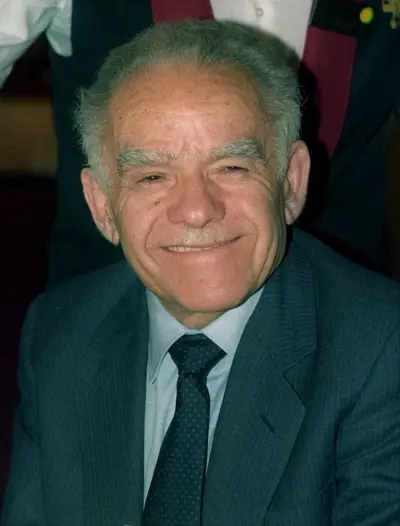
Yitzhak Shamir was an Israeli politician and the seventh Prime Minister of Israel, serving two terms, 1983–84 and 1986–1992. Before the establishment of the state of Israel, Shamir was a leader of the Zionist militant group Lehi. After the establishment of the Israeli state he served in the Mossad between 1955 and 1965 and as a Knesset Member. He served as the 6th Speaker of the Knesset and as Foreign Affairs Minister. Shamir was the country's third-longest-serving prime minister after David Ben-Gurion and Benjamin Netanyahu.
