Camille Paglia Quotes
In the west, Apollo and Dionysus strive for victory. Apollo makes the boundary lines that are civilization but that lead to convention, constraint, oppression. Dionysus is energy unbound, mad, callous, destructive, wasteful. Apollo is law, history, tradition, the dignity and safety of custom and form. Dionysus is the new, exhilarating but rude, sweeping all away to begin again. Apollo is a tyrant, Dionysus is a vandal.
Paglia, Camille. Sexual Personae: Art and Decadence from Nefertiti to Emily Dickinson. Yale University Press, 1990, p. 30.


He had been invited to a White House arts function but refused.

Egypt was miserably governed by the Ottoman Turks. The people had no rights or freedoms and poverty and ignorance was universal. Napoleon, came to Egypt in much the same way as the United States did in Iraq two centuries later—with the assumption that bringing freedom and affluence, modern government, and a greater expectation of standard of living would find favor with most of the downtrodden inhabitants. However, although the Egyptians hated their status quo, it was culturally something they were comfortable with. It was Islamic and not Christian or secular as much of France was. Yet occupation by these foreigners was more onerous culturally than occupation by the Islamic Ottoman Turks.
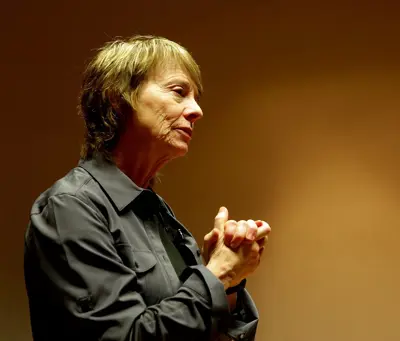
Camille Anna Paglia is an American feminist academic and social critic. Paglia has been a professor at the University of the Arts in Philadelphia, Pennsylvania, since 1984. She is critical of many aspects of modern culture and is the author of Sexual Personae: Art and Decadence from Nefertiti to Emily Dickinson (1990) and other books. She is also a critic of contemporary American feminism and of post-structuralism, as well as a commentator on multiple aspects of American culture such as its visual art, music, and film history.
