Murray Rothbard Quotes
In the United States, after World War II, it took about two decades for the message to slowly seep in that inflation was going to be a permanent fact of the American way of life.
Rothbard, Murray N. The Mystery of Banking. Richardson & Snyder, 1983.


_0_thumbnail_47x47.jpg "Bill White, Mayor of Houston, Texas")


FDR was then a candidate for the Democratic Vice Presidential Nomination. This statement shocked some of the conservative French and British delegates and officials such as Ramsay MacDonald, Georges Bonnet, and Neville Chamberlain, but economist John Maynard Keynes strongly approved of Roosevelt Roosevelt’s statements. At issue was whether or not the major currency powers should confer frequently and set the international currency exchange rates or should the rates float and be determined at any point by the free market in currency. FDR held the latter view which was opposed to the positions of the conservative banker-oriented delegates from the European counties, However Roosevelt’s statement was considered “harsh” and “vituperative” by the conservatives and the entire conference collapsed over them. FDR admitted that perhaps he had been too strong and blunt in his language. An irony of this quotation is that 80 years later the positions of liberals and conservatives had both flip-flopped. It became the conservatives who adopted the FDR free market for currency exchange while many liberals called for government intervention and agreement on exchange rates to prevent instability.


There actually are restraints on how much paper money a government will issue, but unlike with a gold standard where the restraint is external and controlled by how much gold the country can amass. However, with paper money the restraints area all internal. If too much money is printed, the value of the money relative to gold, silver and other nation’s money will go down and imports will become more expensive. Excessive printing of money can easily produce inflation. However, the internal restraints can be overcome by the government’s need to raise money for war, debt or other purposes. So Paul and many other politicians have a deep distrust of paper money not backed by Gold or Silver. In the United States however, the Government does not control the money supply or the printing policies of money. This is under the control of the Federal Reserve Board which while appointed by President’s as terms expire, have a great deal of independence both from the Executive and Legislative Branches. For that reason Paul is even more distrustful when the Federal Reserve decides to print money. See {629491} for his unsuccessful effort to abolish the Federal Reserve Bank.


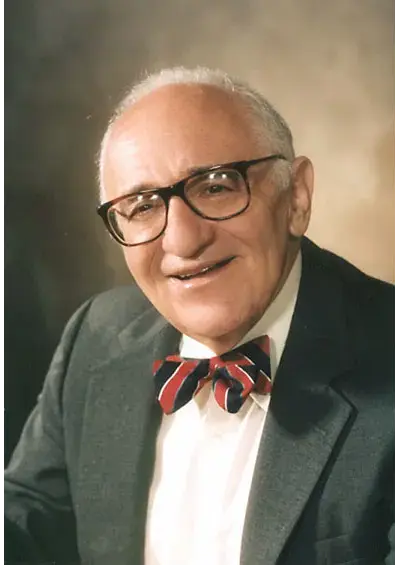
Murray Newton Rothbard was an American heterodox economist of the Austrian School, economic historian and political theorist. Rothbard was the founder and leading theoretician of anarcho-capitalism, a staunch advocate of historical revisionism and a central figure in the 20th-century American libertarian movement. He wrote over twenty books on political theory, revisionist history, economics, and other subjects.
