William T. Vollmann Quotes
'In the nineteenth century, we beat the British more than once,' Afghans often told me. 'In the twentieth century, we beat the Russians. In the twenty-first, if we have to, we'll beat the Americans!'
Vollmann, William T. An Afghanistan Picture Show: Or, How I Saved the World. Farrar, Straus and Giroux, 1992.


This audacious general and Queen of one of the Roman Provinces conquered most of the area including Egypt. Then she declared her independence from the Roman Empire itself. A master of multilateral coalition leading, she was able to attract nearby provinces to join her. The Roman Emperor Aurelian himself set out to subjugate Zenobia—the Roman, Latin name. In the first battle, the Romans won a tactical victory for some territory but lost many men. The Emperor asked Bat Zabbai to surrender, but she refused in this famous reply. She was counting on the fact that the Romans would not accept the high losses she was inflicting. See Aurelian’s letter to the Roman Senate {606345}. The Romans did however did pay the price and eventually conquered Bat Zabbai and brought her to Rome as a captive. However she was very much admired by Roman society and after she pledged to not revolt against Rome, she was allowed to live in Rome—but not go back to Syria where she might raise another army. She became a major celebrity of Roman society and married a Roman Senator. Her exploits although well known at the time lapsed into obscurity in that later Roman Christian society did not see her as a fitting Christian female example, and when Islam developed in Syria, she was not considered a model Muslim woman. So a key figure in Roman history was ignored by most of the cultures until recently where the original documentation of the time has been made more widely available.


He was not supported and a peace was negotiated with the British. De la Rey became a Senator and later was shot while trying to organize another rebellion.


Nguyen Ai Quoc was early pseudonym. It was many years and millions of combatants sacrificed, but the Vietnamese resistance finally won.

Response to an offer by Commodore Preble to exchange prisoners.


1st Earl of Chatham. The speech was given in the midst of the American Revolution.

Thai society had been polarized and very large peaceful demonstrations (by the Yellow Shirts) were calling for the resignation of the government which although very corrupt and controlled by a single very rich family which had extensive support of the rural and poor (the Red Shirts). This quotation illustrates how a peaceful protest could lead to violence and terrorism. This Red Shirt leader, rather than lose, would lead violence in the streets like the Brown Shirts of the pre WWII Germany. If the violence fails, he was willing to go underground and become a terrorist movement.


Hoxha was a mixture of extreme Communist and extreme nationalist. Note the paranoia about intermarriage and interbreeding with other nationalities which was typical of Balkan nations,. He actually deluded himself into thinking that Albanian occupation and invasion had never resulted in female fraternization or rape and subsequent ethnic mixing. International communism however, on this point was just the opposite of Hoxha’s—the advocated an international view of intermarriage and breeding. Theirs was a class paranoia, not a nationalistic or racial paranoia.
Southern intellectuals at the beginning of the Civil War were convinced of their invincibility. They misjudged both the effect of the industrial and technological might and the moral intensity of the North.

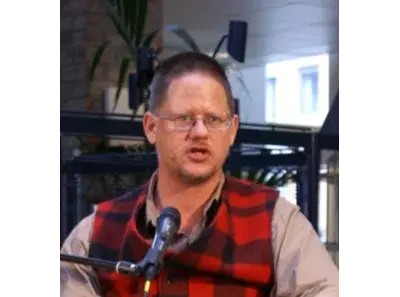
William Tanner Vollmann is an American novelist, journalist, war correspondent, short story writer, and essayist. He won the 2005 National Book Award for Fiction for the novel Europe Central.
