Deng Xiaoping Quotes
In the final analysis, the general principle for our economic development in China is still that formulated by Chairman Mao, that is, to rely mainly on our own efforts with external assistance subsidiary.
Deng, Xiaoping. "Answers to the Italian Journalist Oriana Fallaci." Selected Works of Deng Xiaoping, vol. 2, Foreign Languages Press, 1984, p. 331.


This same argument was used before and since to justify protecting domestic manufacturing from foreign competition until it can mature sufficiently to compete in a global economy. One difficulty occurs if protective tariffs are imposed for this reason. The manufacturers protected never seem to reach the point where they can compete without the subsidy.


Although the Premier recognizes the importance of environmental protection it is difficult for China and other developing countries to make the necessary trade off’s at the expense of slower growth which means continued poverty. Even in the United States with all its affluence, slowing economic growth for environmental reasons is politically very difficult.

Some Tibetans believe that the Han Chinese will indeed develop the area, but will in the process change the nature of the area and its culture—that the Han culture will dominate just as initially minority cultures have dominated and transformed South Africa, India, Canada and even the United States. Of course, modernization per se changes a culture radically.


Alibaba—the largest e-commerce company in the world, larger than Amazon.com and eBay put together--had hundreds of millions of on-line Chinese buyers and hundreds of thousands of Chinese retailers. A huge proportion of Chinese retail sales go through Alibaba which facilitates a very large part of the Chinese economy.


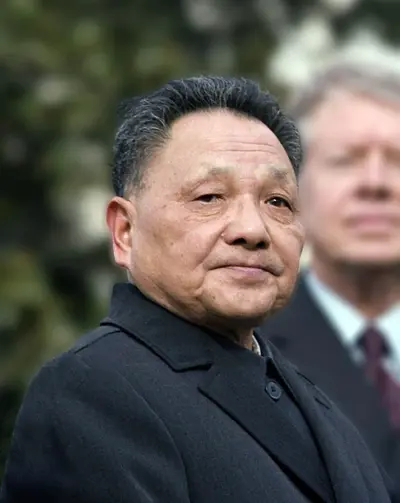
Deng Xiaoping was a Chinese revolutionary and statesman who served as the paramount leader of the People's Republic of China (PRC) from December 1978 to November 1989. After Mao Zedong's death in 1976, Deng gradually rose to supreme power and led China through a series of far-reaching market-economy reforms, earning him the reputation as the "Architect of Modern China".
