John le Carre Quotes
In the '60s - and right up to the present day - the identity of a member of the British Secret Services was and is, quite rightly, a state secret. To divulge it is a crime. The Services may choose to leak a name when it pleases them.
Le Carré, John. "John le Carré: The Spy Who Came in from the Cold Turns 50." The Guardian, Guardian News & Media, 12 Apr. 2013.

When Bob Casey was the CIA Director, he the declassification of all the operational files of the WWII Office of Strategic Service. The huge collection is referred to as Record Book 2.6


Agree resigned from the CIA in protest to its political position.


about Iraq possessing weapons or mass destruction This is the one of the kind of statements which many felt were prevarications to justify the President’s desire to invade Iraq. See {618461} for an example of the reaction that was generated.


The American Embassy in Berlin had wiretapped the telephone and telegraph wires of the German Foreign Ministry. The man who did that was hired by Secretary of State Lansing as the first employee of the new unit.

Intelligence agents tend to prefer covert activities to the less dramatic, non-exciting, activity of gathering and analyzing intelligence. Most national intelligence services tend to enlarge their portfolio to include covert activities regardless of what the national leaders intended. Because of the secrecy, they can often get away with this.

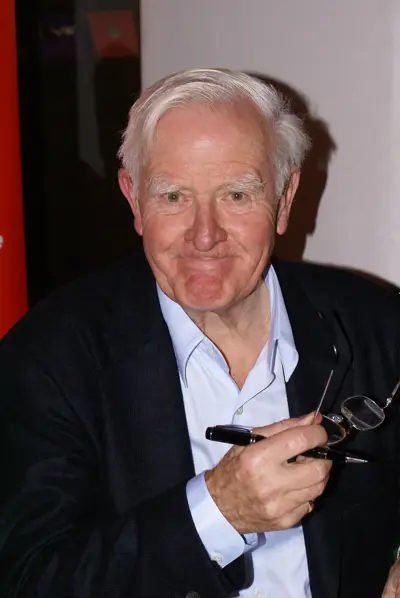
David John Moore Cornwell, better known by his pen name John le Carré (/ləˈkæreɪ/), was an English author with Irish citizenship, best known for his espionage novels. During the 1950s and 1960s, he worked for both the Security Service (MI5) and the Secret Intelligence Service (MI6). His third novel, The Spy Who Came In from the Cold (1963), became an international best-seller and remains one of his best-known works.
