Richard Dawkins Quotes
In medieval times, the Church used to sell 'indulgences' for money. This amounted to paying for some number of days' remission from purgatory, and the Church literally (and with breathtaking presumption) issued signed certificates specifying the number of days off that had been purchased. . . . And of all its money-making rip-offs, the selling of indulgences must surely rank among the greatest con tricks in history. . . .
Dawkins, Richard. The God Delusion. Bantam Books, 2006, p. 317.

The King had earlier replaced the Pope as the head of the English church. The references to money referred to a then common corruption of the Church whereby people could buy indulgences—religious papal pardons of past or future sins. This was a major revenue source for the Vatican and a major issue for Martin Luther and the Protestant Reformers some of who saw the pope as the Devil incarnate See {623153}. For Martin Luther’s view pf the practice and {626720}, {595195}, and {639436} for other contemporary views.


Jefferson was not anti-Christian as some accuse him. He was a great admirer of Jesus’ life and philosophy. He did object to the non-ethical aspects of Christianity—the rituals, miracles, dogma, hierarchy, and organized churches. See {611664} . Jefferson even went so far as to compile his own version of the Bible—New Testament sometimes called the “Jefferson Bible”—where he translated the material and then extracted the ethical principles leaving out everything else.

Starting with the Crusades, the Popes began giving indulgences to those who would die in battle fighting for a holy cause. The Papacy was then at one of it’s lowest points. Two men, Clement and Urban, both claimed the Papacy and each had raised an army to fight the other. Each was promising indulgences to those who would fight, and in a modality similar to the Muslim terrorists of the 21st century, the soldiers were promised ascendancy to Heaven if the fell in battle for such a holy cause. Wycliffe, in a wonderfully original notion, proposed that the people who live in peace be granted the indulgences. See {618086}.


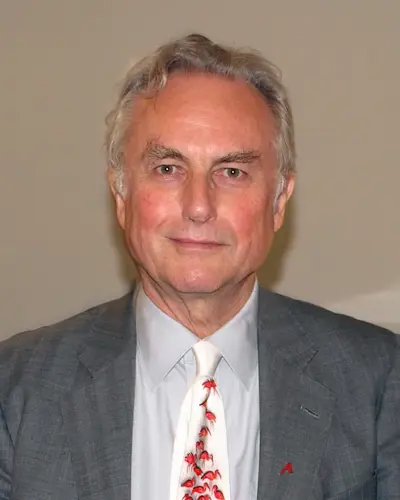
Richard Dawkins FRS FRSL is a British ethologist, evolutionary biologist, and author. He is an emeritus fellow of New College, Oxford, and was the University of Oxford's Professor for Public Understanding of Science from 1995 until 2008. An atheist, he is well known for his criticism of creationism and intelligent design.
