Han Fei Quotes
In dealing with those who share his bed, the enlightened ruler may enjoy their beauty but should not listen to their special pleas...
Han Fei, 280 BC–233 BC, [Han Feizi], Chinese Philosopher, The Eight Villanies
Sourced by: Eigen's Political and Historical Quotations


Rafael Edward "Ted" Cruz" Rafael Edward ""Ted"" Cruz

The WWI veterans lobby was formed and they pressured Congress into authorizing a bonus of between $1 and $1.25 for each day of wartime service. However, the catch was that they would not be paid until 1945 unless they did, Hence the name for the bonus. The Bonus March on Washington would eventually march on Washington to get their pay while they were still alive. Finally, the bonuses were paid immediately after Franklin Delano Roosevelt assumed the Presidency even though he personally opposed paying it early. Congress passed the law over his veto.


The Greek culture was quite sexist. However, all cultures had observed strong women, some who ruled and others where wives or mistresses of rulers were very influential if not powerful.


Even though a strong feminist, note the Victorian concept of sex—namely that it is the man who does the seduction and the woman who is the passive victim. Also that the act of sex has somehow damaged a woman so that she needs “maintenance”. Modern feminists and non feminists, and our laws and culture, no longer look at sex as damage to a woman so the seduction, regardless of whether the male or the female is the seducer, is not a problem that needs compensation. It is only if children result, that there is male responsibility—not for the seduction but for taking his share of the responsibility for creating another human being that needs support. Also, most modern cultures do not see all sex as a seduction of one party be another—sex can be and often is the joint decision of consenting adults. In some cases females seduce males.


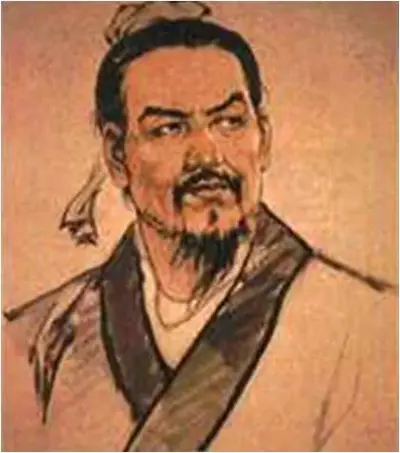
Han Fei (/hɑːn/; traditional Chinese: 韓非; simplified Chinese: 韩非; pinyin: Hán Fēi; c. 280 – 233 BC), also known as Han Fei Zi, was a Chinese philosopher or statesman of the Legalist school during the Warring States period, and a prince of the state of Han.
