Ai Weiwei Quotes
In China, there is a long history of the government not revealing information, so it’s difficult for the Chinese people to ever know the truth. It is vital that we try to bring that truth to life.
Before the Communists, the Nationalist Chinese government controlled the press even more so than the Communists did. And the Chinese Emperors before the Nationalists had a well educated elite of administrators who ran the government but the great mass of the people knew virtually nothing other than what the rulers wanted them to know. With mass illiteracy, there was no efficient way to communicate with the masses anyway. China, with a history of great intellectual accomplishment, has had the most ignorant people in the world by virtue of its size and general illiteracy.
Ai Weiwei, Chinese Artist, Architect, Designer, and Dissident, “An Artist’s Ordeal.” Newsweek, November 11, 2009
Sourced by: Eigen's Political and Historical Quotations


Senator Dianne Feinstein, Chairman of the Senate Intelligence Committee, had released an unclassified Summary of the Committee Report on the CIA using torture and perverse treatment of suspect terrorists in the aftermath of the 9-11 attack on New York. Most Republicans argued vehemently that the Report should be classified and kept secret as the CIA behavior was so egregious, unpalatable, and morally reprehensible that there would be negative consequences including perhaps demonstrations and attacks against Americans in foreign countries. Moreover, Terrorist organizations would use the heinous CIA behavior as a recruiting tool for anti-American terrorists. McCain, who had himself been the victim of North Vietnamese torture cited the moral and ethical reasons to prohibit torture but also explained what has been proven over and over again that torture victims will tell the torturer any nonsense that they think the torturer might believe just to get obtain relief from the agony of the torture.


The Green Party and The Socialist Party had combined in an alliance. This was their publication. In addition to showing that the right to know and freedom of information was a major issue in other industrial democracies as well as the United States, the quotation is particularly interesting because the title of the article was used over 200 years before by none other than the American patriot, Patrick Henry. See {60328}. The phrase has been used many times in many lands since.


The executive order to which this statement referred was the then new President’s first—Executive Order 13489. It was enthusiastically received by the public, historians, researchers and the media. However at the end of Obama’s two administrations, the system was a little better than when George W. Bush, blocked much of the Freedom of Information Act from being implemented. However, the agencies who want to operate in secrecy without having to deal with public criticism, had developed even more sophisticated techniques of avoiding transparency and when they must disclose, they have developed techniques to delay the process, sometimes even for years, while they study whether the material should be disclosed. The president personally declassified a few CIA files from decades ago that the agency maintained should be secret, but he did nothing else systemic so solve the problem of declassifying and material and nothing to control the over classification which virtually everyone agrees is a major problem. More material is being classified than ever.


See {594396} for his going a step further and advocating lying in the interest of the nation. Note that he does not consider the simple alternative of telling the voters and then fixing the problem.
This quotation illustrates that government use of censorship and classification to cover up errors and mistakes in not just a modern phenomenon. It is a technique that government’s will gravitate to whenever they have the chance.

At the time there was no Secrecy & Classification System nor any laws enforcing secrecy or confidentiality. However there was no freedom of information laws of expectations even on the part of journalists. This was the first Freedom of Information policy of the American government. Some politicians were more open than others but there was no national, governmental before this. There were however leakers and whistleblowers though the terms were not in use. Note that Roosevelt herein created the first whistle blower protection—himself.


As hard as it is for us to imagine today, while her husband was President of the United States, the First Lady wrote a nationally syndicated newspaper column every single day with politics frequently the subject. While she usually agreed with the President, there were occasions where they seemed to not see things exactly the same. She tended to be more liberal than he. However, there were those who believed that when she criticized politicians, it was with FDR’s knowledge and blessing and she sometimes did his “dirty work.” Eleanor Roosevelt was one of the most influential people in the country—certainly more-so than any First Lady before and since.

Agree resigned from the CIA in protest to its political position.

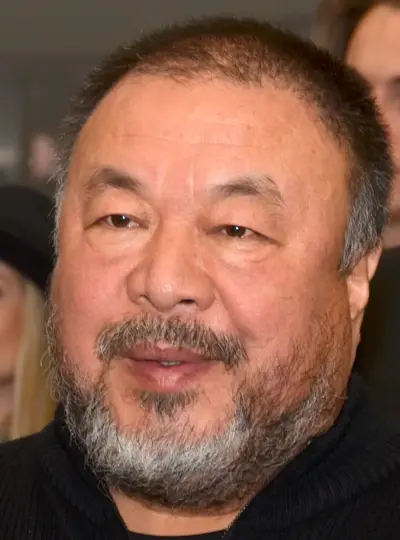
Ai Weiwei is a Chinese contemporary artist and activist. Ai grew up in the far north-west of China, where he lived under harsh conditions due to his father's exile. As an activist, he has been openly critical of the Chinese Government's stance on democracy and human rights. He investigated government corruption and cover-ups, in particular the Sichuan schools corruption scandal following the collapse of "tofu-dreg schools" in the 2008 Sichuan earthquake. In 2011, Ai Weiwei was arrested at Beijing Capital International Airport on 3 April, for "economic crimes". He was detained for 81 days without charge. Ai Weiwei emerged as a vital instigator in Chinese cultural development, an architect of Chinese modernism, and one of the nation's most vocal political commentators.
