Ezra Pound Quotes
In case I conk out, this is provisionally what I have to do: I must clarify obscurities; I must make clearer definite ideas or dissociations. I must find a verbal formula to combat the rise of brutality--the principle of order versus the split atom.
Pound, Ezra. Quoted in The Life of Ezra Pound, by Noel Stock, Pantheon Books, 1970, p. 434.


He was ironically observing that most animals and primitive humans, there is fighting among the species but rarely do the fight to the death. One usually gives up, and the other will let him retire from the fight. The fighter who is getting the worst of it, will retire from the battle. However, “civilized” humans will fight for principles and ideas often to the death. “Civilized humans” also think ahead and will strive to exterminate an enemy and kill even after surrender or submission.

During the American Revolution, the Iroquois sided with the British, aiding them militarily and other ways. The revolutionaries responded by attacking and destroying most of the Iroquois who retreated to British Canada.


This is an excellent example of the twisted, self-fulfilling logic of the Afrikaners in justifying apartheid. Many Afrikaners were inveterate racists, and were also usually armed which was a rural tradition of their early immigration and the Zulu and Boer Wars. Those whites would cause a riot if a black was allowed into a white audience performance. That in turn would cause chaos. Therefore mixed audiences could not be allowed. It never occurred to Botha and his colleagues that the government’s responsibility was to control and restrict the white rioters and instigators. This was not unique Afrikaner thinking; the same logic prevailed throughout the American South in the Jim Crowe segregation era.


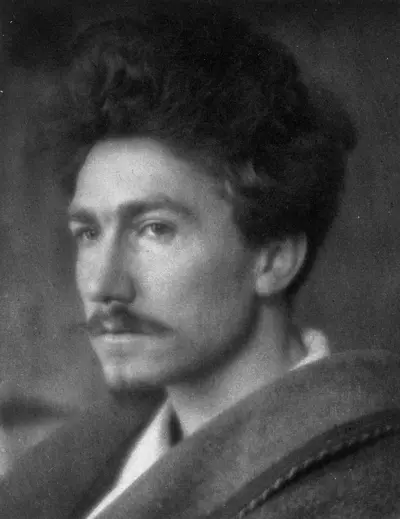
Ezra Weston Loomis Pound was an expatriate American poet and critic, a major figure in the early modernist poetry movement, and a fascist collaborator in Italy during World War II. His works include Ripostes (1912), Hugh Selwyn Mauberley (1920), and his 800-page epic poem, The Cantos (c. 1917–1962).
