Omar Al-Bashir Quotes
In any war, mistakes happen on the ground; this is not the policy of the government. We are a government that functions according to laws.
Haidar, Suhasini. "We Are Victims of U.S. Double Standards: Omar Al-Bashir." The Hindu, 30 Oct. 2015.


The day before, Helms’ deputy testified about the high number of civilian casualties that American bombing of North Vietnam had caused.


Turkey, under the control of the triumvirate of the 3 Young Turks had massacred almost all of the Armenian population in the area claimed by Turkey. At the end of WWI, there were many demands that those who ordered the policy of a Turkish genocide and those who carried it out by brought to justice—tried and punished. The Sultan had done little if anything to stop the slaughters although he was very weak, Turkey under the Young Turks had also picked the wrong side and allied with the Germans. The Sultan and his Grand Vizier were trying to pick up the pieces and maintain the Ottoman Empire as best they could despite they the fact that they lost control of much of their vast territory. At the Paris Peace Conference, the Grand Vizier virtually admitted the crimes and committed the Turkish government to determining the guilty and bringing them to justice. He actually had 50 of the worst offenders arrested (See {620595}.). However, there were a few tried and one governor of a province was hanged and a few others received short jail sentences. Talaat, the worst of The Young Turks regarding the genocide, escaped to Germany. But he was tracked by a surviving Armenian who assassinated Talaat. The assassin was acquitted by a sympathetic German court which ruled that the extermination of the assassin’s family had been so traumatic that temporary insanity relieved the assassin of criminal responsibility.

Bombing had reached the point where conventional bombing raids on industrial cities like Tokyo and Hamburg produced even more civilian casualties than did the atomic bomb at Hiroshima. Tibbets’ view, through the lens of hindsight, was developed by many of the Allied servicemen who had been forced into war by expansionist and militaristic nations like Japan and Germany both of which placed much of their war material manufacturing capability in the midst of their otherwise civilian cities. Both brutally violated the laws of war and committed atrocities many times over before the allies began retaliating. There are still some who believe that it was wrong to drop the atomic bomb on Japan. Some even feel that the mass bombing of Japanese and German cities in retaliation and in furtherance of the war effort was morally wrong. But at the time, the millions of casualties anticipated in the invasion of the Japanese mainland, persuaded virtually every American soldier and civilian that there was nothing wrong with use of the Atomic bomb, and many saw it as an absolute Godsend to prevent all the American and Japanese causalities that would have come otherwise. Many scholars remark on how it was virtually impossible to find any significant number of misgivings before or just after Hiroshima. Tibbet’s view was typical.


Hamas had fired thousands of rockets and other missiles at Israeli population centers—war crimes under the Geneva Conventions. Israel finally retaliated against Hamas facilities in Gaza. However, in an unprecedented effort to avoid civilian casualties, the Israeli Defense Forces warned the people by indicating which targets they were going to strike. They also dropped leaflets in Arabic telling the civilians that they are not the targets but to try and avoid harm to them and their families, they should evacuate the neighborhoods that would be under attack. Hamas had placed their missile launchers and other weapons in and near schools, hospitals, mosques and civilian housing risking their civilian population—see {640841}.


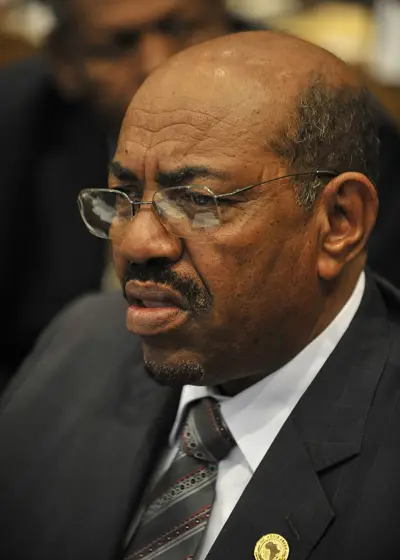
Omar Hassan Ahmad al-Bashir is a Sudanese former military officer and politician who served as the seventh president of Sudan under various titles from 1989 to 2019, when he was deposed in a coup d'état. He was subsequently incarcerated, tried and convicted on multiple corruption charges. He came to power in 1989 when, as a brigadier general in the Sudanese Army, he led a group of officers in a military coup that ousted the democratically elected government of prime minister Sadiq al-Mahdi after it began negotiations with rebels in the south. He was elected three times as President in elections that have been under scrutiny for electoral fraud. In 1992, al-Bashir founded the National Congress Party, which remained the dominant political party in the country until 2019. In March 2009, al-Bashir became the first sitting head of state to be indicted by the International Criminal Court (ICC), for allegedly directing a campaign of mass killing, rape, and pillage against civilians in Darfur. On 11 February 2020, the Sudanese government announced that it had agreed to hand over al-Bashir to the ICC for trial.
