Alexis de Tocqueville Quotes
In America the majority raises formidable barriers around the liberty of opinion; within these barriers an author may write what he pleases, but woe to him if he goes beyond them.
Alexis de Tocqueville, 1805-1859, French Foreign Minister & Writer, Democracy in America, Volume I, 1835
Sourced by: Eigen's Political and Historical Quotations


The mayor was forming a municipal art committee to censor art shows:


Islamic modernists like Serageldin are many among the educated Muslims but their views are often drowned out by the violence and extremist statements of the fundamentalists.

This became a critically important quotation a half century after it was made. Judge Hand articulated the majority Western and Judeo-Christian value proposition between dissent and heresy. However, for the majority of the Islamic world, the reverse represents the majority value that is held. There is a minority in the West that agrees that avoidance of heresy is paramount and a minority of the Muslim world that agrees that the protection of dissent is the more important value, but the two civilizations were at odds in the 20th and 21st centuries. However, Islam is about 600 years younger than Christianity. 600 years ago, the Christian world agreed with the Muslim society and prevention of heresy was the more important value. The Reformation and the enlightenment followed by the world example of America produced a transformation and this may occur in the majority of the Islamic world in time.


The 1st Amendment is almost absolute in its protection of speech. However, ironically the Untied States has much less internecine conflict with minorities better off than the nations where hate speech is illegal and criminal.

This is a very important quotation. The reason is that the Secretary General of the UN backed off and did not support the absolute right of freedom of speech and expression. He favored allowing exceptions. In this case a film was made that was not only intellectually an attack on Islam but it was done in such a manner that most orthodox Muslims were insulted and offended that their Prophet and religion were both insulted in a blasphemous manner. It was a film that was very much in poor taste, insensitive and gross. One major difference between freedom of speech as interpreted by most countries and the United States is that most other nations do not allow and defend hate speech and material that insults a people or their religion or is blatantly blasphemous. The U. S. however protects anyone who blasphemously attacks anyone or any group for any reason. There are a few other nations that protect free speech absolutely but Germany, the United Kingdom, Israel, and India are considered major examples of democracy and freedom and yet they do not protect free speech absolutely. In most Muslim nations, whatever freedom of speech they might have does not apply to blasphemy where Islam is concerned. In most of the Arab nations, there is rank hypocrisy in that freedom of speech is tolerated and protected if there is a blasphemous attack on any other religion such as Christianity, Judaism, Buddhism, or Bhai. This kind of difference on human rights between the U. S. and the UN causes many Americans to oppose the US participation in UN operated courts and projects to protect human rights. Few Americans would favor being a part of an international court system where an American could be convicted of blasphemy for what he had written or said. Essentially, the Secretary General has taken a stand against the United States Constitution and the values of most Americans and many other people of the world like Denmark, or Norway. Offensive and insulting speech is the only kind of speech that needs protection. If speech offends no one, there is no need for its protection.

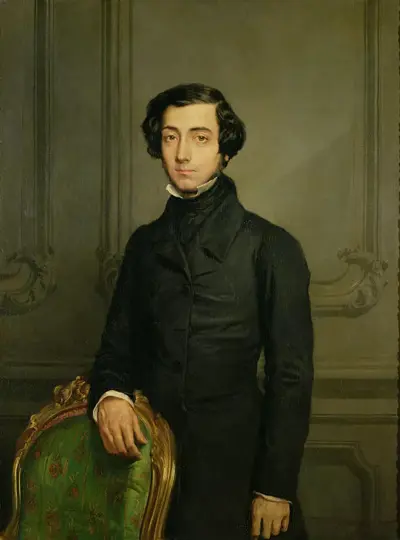
Alexis Charles Henri Clérel, comte de Tocqueville, colloquially known as Tocqueville (/ˈtɒkvɪl, ˈtoʊk-/), was a French aristocrat, diplomat, political scientist, political philosopher and historian. He is best known for his works Democracy in America (appearing in two volumes, 1835 and 1840) and The Old Regime and the Revolution (1856). In both, he analysed the improved living standards and social conditions of individuals as well as their relationship to the market and state in Western societies. Democracy in America was published after Tocqueville's travels in the United States and is today considered an early work of sociology and political science.
