George Mason Quotes
In all our associations; in all our agreements let us never lose sight of this fundamental maxim - that all power was originally lodged in, and consequently is derived from, the people.
Mason, George. "Remarks on Annual Elections for the Fairfax Independent Company." 1775. The Papers of George Mason, 1725-1792, edited by Robert A. Rutland, vol. 1, University of North Carolina Press, 1970, p. 230.


There is a certain redundancy in that “Fenian” means “Party.”

The original draft presented to him had said “We the assembled delegates of ….” Morris made one of the most important and dramatic edits in the history of humanity. See {600144} for an idea of how determinative the phrase was years later.


_0_thumbnail_47x47.jpg "Statue of Robert Hall in Leicester.")
For many people the implication of this quotation is that there should be no government secrets withheld from the citizens who have the right to examine. Others argue that government may have temporary secrets to protect against foreign enemies for example, but that these must be declassified very promptly so that the citizens can examine the actions of their government in time to replace the government if they are not satisfied. Almost all government officials tend to reject the first implication out of hand, and grudgingly accept the second with their discretion controlling when declassification should take place. The problem of America is twofold. There is much over-classification (material kept secret that should not be at all), and the time till declassification is long in general and truly absurd in many cases. For example, there are documents from WWII that by 2013 had still not been declassified. See {591444}, {641317}, and {589105} for exemplar views. William Jennings Bryan introduced this principle into the American political dialogue. See {641027}.


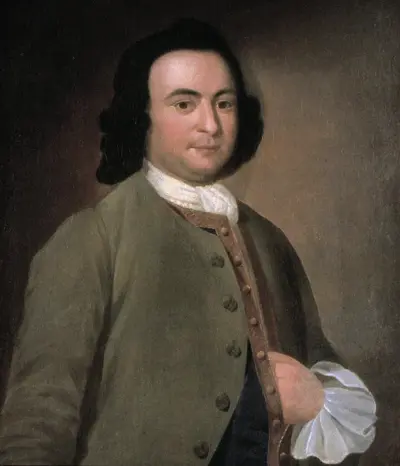
George Mason IV was an American planter, politician and delegate to the U.S. Constitutional Convention of 1787, one of three delegates who refused to sign the Constitution. His writings, including substantial portions of the Fairfax Resolves of 1774, the Virginia Declaration of Rights of 1776, and his Objections to this Constitution of Government (1787) opposing ratification, have exercised a significant influence on American political thought and events. The Virginia Declaration of Rights, which Mason principally authored, served as a basis for the United States Bill of Rights, a document of which he has been deemed a father.
