Neal Katyal Quotes
In 2006, I argued and won Hamdan v. Rumsfeld, a Supreme Court case that struck down President George W. Bush's use of military tribunals at Guantanamo Bay.


The problem that was facing the nation in the early 21st century was when we captured a terrorist, was he a combatant or was he accused by a personal enemy, and had he been tortured to say he was a terrorist. The issue grew more complicated when terrorist suspects were brought to American territory at Guantanamo Bay, and the Courts have always held that a foreigner on American soil had a right to have access to the Federal Courts just as Citizens do. Complicating the situation more was the fact that a few American citizens had joined the terrorists and were they entitled to a civilian trial as all other Americans were.


See {618460} for the kinds of statements that stimulated this type of political attack.


President George W. Bush had ignored a federal law and tapped the phones of Americans without probable cause and a warrant issued by a court. The President’s defenders argued that the President, as Commander in Chief, has the Constitutional responsibility to lead the military and protect the nation. Intelligence gathering is part of military activity. Therefore the intelligence gathering is a Constitutional duty and the Congress, under the separation of powers doctrine, may not interfere with the President’s Constitutional Duty to conduct intelligence. Under this doctrine, the President need not obey laws that he believes impinge on his management of the war effort and the defense of the nation. Most legal scholars believe that this argument is nonsense, but the George W. Bush administration has stated the doctrine and it was the subject of much litigation.

He was referring to the Presidential election of 2000 where the Supreme Court by a 5-4 decision reached a decision that as a de facto matter made George W. Bush President over Al Gore.


In addition to creating many protests from the public, the Bush administration was reprimanded by the Supreme Court which stated that the detention of an American Citizen as an enemy combatant. The administration must charge and try such an American for treason, assault, conspiracy or whatever crimes the facts substantiate. The administration could not just hold a citizen without due judicial processes. They certainly could not detain a citizen and then secretly or openly execute him/her without a trial, conviction, and sentence with all appeals exhausted.

The President and Vice President wanted places to interrogate suspected terrorists where they did not have to obey American law, where the press could be kept away from the prisoners, and there would be no way that a prisoner could get the assistance of attorneys and American Judges could not have any jurisdiction. A number of the prisoners had been picked up by mistake, or were accused by people who had scores to settle, and if the CIA had made a mistake, the public could not find out. Further, they wanted to torture certain prisoners and wanted places where they could use their “enhanced interrogation”—see {637536}--without the public finding out.
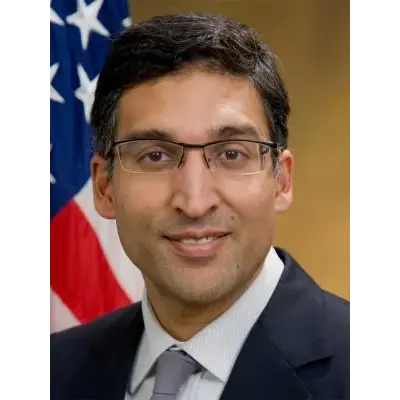
Neal Kumar Katyal is an American lawyer and academic. He is a partner at Hogan Lovells and the Paul and Patricia Saunders Professor of National Security Law at Georgetown University Law Center. During the Obama administration, Katyal served as Acting Solicitor General of the United States from May 2010 until June 2011. Previously, Katyal served as an attorney in the Solicitor General's office, and as Principal Deputy Solicitor General in the U.S. Justice Department. He is currently a Partner of Chamath Palihapitiya Social+capital Partnership and a member of the board of Social Capital Ventures Inc.
