Tariq Ali Quotes
In 1962, President Kennedy expanded an earlier trade embargo put in place by a predecessor, President Eisenhower, to a total economic blockade, which pushed the Cubans further in Moscow's direction.
Ali, Tariq. "Fifty years on, Cuba's revolution is still surviving." The Guardian, Guardian News and Media, 31 Dec. 2008.


The immediate crisis had been averted and no more nuclear missiles would enter Cuba. But we had no leverage to get the few that were already there removed and it would be politically very difficult for the Kennedy administration to get the public to accept ANY nuclear missiles in Cuba. Hence, Stevenson’s statement. See {634554}. Neither side had great intercontinental ballistic missile capability at the time, and we had placed a large battery of missiles in Turkey very close to the Russian border. This gave the U. S. a major military advantage. We could deliver many more nuclear warheads to Russia than they could to the United States. The Russians with this proposal hoped to even the capability. The military advisers and the security and State Department advisors all thought that the U. S. should not give up its nuclear superiority. However, we had no international legal basis for denying the Cubans the right to locate any weapons on their soil, so to prevent the Communists from having nuclear missiles in Cuba we would have to use force which could easily escalate into a nuclear war. Kennedy and McCone both thought that since we had intercontinental ballistic missiles in production and coming on line and would not need the Turkey Missiles to strike all over Russia. So giving up our missile advantage for a short time would not expose us to any undue risk. The other advisors worried that the production of the ICBMs could be delayed—weapons systems were (and are) notoriously longer in production than estimated or planned. They also thought that the morale of the military and civilian population would suffer when they learned that we had given away our military advantage. There was a macho element in their thinking in that we would be giving in to intimidation and look like we were afraid to fight. Last, the political advisors thought that the right wing hawks would pillory the administration for its cowardice in allowing itself to be intimidated by the Russians. Their doctrine was that when faced with force, the Communists will always back down. In the final deal we agreed to remove our missiles from Turkey in 6 months and this would be done in complete secrecy and the Russians would keep the deal secret. That way, Kennedy got 6 more months of production which turned out to have been enough. The public would never know till years later and the Conservatives would not be able to publicly castigate Kennedy. Meanwhile, the conservatives would continue to believe that the Russians backed down in the face of force—the naval blockade as this was ‘proved’ their doctrine when the Russians had not backed down at all. The strategy and tactics of the Kennedy administration are still analyzed and argued about today with many Americans just realizing that we did not intimidate the Russians with force or the threat of force to remove their Cuban missiles.


Romania had a mediocre small arms manufactureing capability but their weapons were not in great demand by governments around the world. However, there were illegal insurgent groups in many countries who would pay hard currency for arms that would b smuggled into various countries. Governments like Romania were not supposed to sell to these groups, but Romania did.

This quotation illustrates the statements of White that caused conservatives to dislike him. However, most historians agree that White passed classified information to the Russians. He was accused of being a Communist, but there was never any evidence of that. Some people believe that he was a spy for the Russians and committed espionage, but others disagree observing that White was very much his own man and felt that much information that was classified never should have been. White substituted his own judgment, it is believed, about what could be given to the Russians for the security system. He was an admirer of what Russian socialism had accomplished economically, educationally and medically since the 1917 revolution deposing the Czar. Russia had been a valuable military ally, which had taken the brunt of both military and civilian casualties in WWII. White’s economics were certainly not Marxist but very much Keynesian. He was subpoenaed by the House Un-American Activities Committee where he was accused of being a Communist which he denied (see {634907}). He died of a heart attack 3 days later.


This editorial marked what most people agreed was the end of the Cold War.


The Cold War was ended and we were at peace with Russia and many people think the continuing hostility is counter-productive.

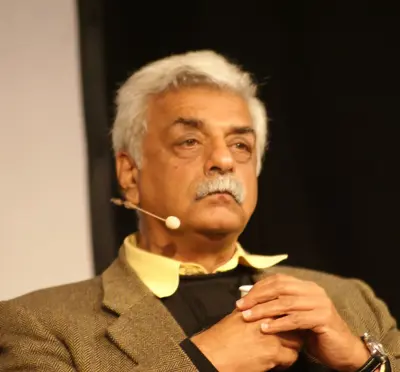
Tariq Ali is a British political activist, writer, journalist, historian, filmmaker, and public intellectual. He is a member of the editorial committee of the New Left Review and Sin Permiso, and contributes to The Guardian, CounterPunch, and the London Review of Books. He read Philosophy, Politics, and Economics at Exeter College, Oxford.
