Martin Ryle Quotes
In 1945 J.A. Ratcliffe ... suggested that I [join his group at Cavendish Laboratory, Cambridge] to start an investigation of the radio emission from the Sun, which had recently been discovered accidentally with radar equipment. ... [B]oth Ratcliffe and Sir Lawrence Bragg, then Cavendish Professor, gave enormous support and encouragement to me. Bragg's own work on X-ray crystallography involved techniques very similar to those we were developing for "aperture synthesis", and he always showed a delighted interest in the way our work progressed.
Ryle, Martin. "Martin Ryle – Biographical." Les Prix Nobel en 1974, edited by Wilhelm Odelberg, Nobel Foundation, 1975.


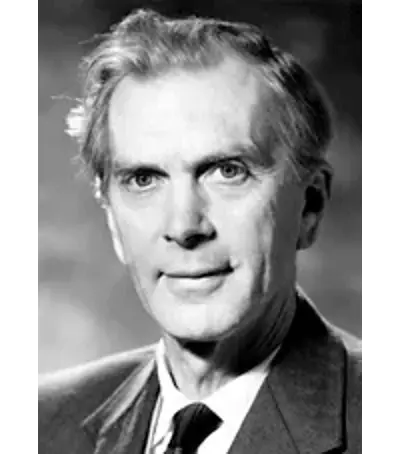
Sir Martin Ryle FRS was an English radio astronomer who developed revolutionary radio telescope systems (see e.g. aperture synthesis) and used them for accurate location and imaging of weak radio sources. In 1946 Ryle and Derek Vonberg were the first people to publish interferometric astronomical measurements at radio wavelengths. With improved equipment, Ryle observed the most distant known galaxies in the universe at that time. He was the first Professor of Radio Astronomy at the University of Cambridge, and founding director of the Mullard Radio Astronomy Observatory. He was the twelfth Astronomer Royal from 1972 to 1982. Ryle and Antony Hewish shared the Nobel Prize for Physics in 1974, the first Nobel prize awarded in recognition of astronomical research. In the 1970s, Ryle turned the greater part of his attention from astronomy to social and political issues which he considered to be more urgent.
