Vera Lynn Quotes
In 1939, a newspaper ran a competition for the first load of boys off to war to pick their favourite singer. They chose me from my radio broadcasts. That's when I became known as the 'forces' sweetheart.'
Lynn, Vera. Some Sunny Day: My Autobiography. HarperCollins, 2009.


What is particularly interesting about this quotation is that it shows the role that vengeance played in the support of the war effort. Revenge is a “baser” motive than making the world safe for democracy or preserving freedom or stopping dictators. Yet the political and military leadership did not shy away from revenge as a war aim. Contrast this with later wars. Arguably the sneak attack on Pearl Harbor created a different dimension than existed in the Korean or Vietnam wars. Yet in the War on Terror, the attack of 9-11, created a situation like Pearl Harbor did. Yet President Bush and other political and military leaders had a definite policy of never acknowledging that revenge was a factor, despite the fact that many Americans openly saw this as a major war aim.

Women were needed in industry and the military. See {584783}.


Builder of over 90 percent of the U. S. Navy World War II Boats
Assigned to the Treasury Department to create war bond posters


The Japanese Aggression in the Pacific had curtailed the navy’s supply of hemp for the large ropes that tethered ships. Nylon was not yet used for rope, and the navy provided seeds to Midwest farmers and would purchase their hemp crop. The marijuana was used as a recreational drug by relatively few people then even though there were hundreds of thousands of acres of marijuana growing throughout the Midwest. See {599550} for a similar effort at the time by, the Department of Agriculture.


This statement is perhaps the greatest and most eloquent description of the United States exceptionalism and its behavior in WWII. Such a statement could only come from a non-American.

Steinbeck also served as a journalist as did Earnest Hemmingway and other great American writers. In WWII there was a great deal of censorship and even more self censorship by the press. The result is that many of the U. S. military blunders were covered up on the grounds that it would not be good for the morale of the soldiers to know that their officers had made such tragic mistakes.
Soong's brothers-in-law were Dr. Sun Yat-sen and Generalissimo Chiang Kai-shek. He split with Chiang when he realized that Chiang was interested only of strengthening his power and fighting Mao and the Chinese Communists rather than the Japanese who occupied key parts of China. However, the Chinese had been fighting the Japanese for over 5 years and had while Japan occupied parts of Chine, they Japanese were still pinned down fighting the Chinese Communists, the American Volunteer Flying Tigers and occasional Chiang initiatives against the Japanese. Soong used the word democracy very liberally. China was divided between to power centers. Mao’s Communists and Chiang Kai-shek’s Nationalists. Both had “elections” but the Communists were a classic one party dictatorship of the left and Chiang was a classic dictator of the right. However, both were allies of the United States and enemies of Fascist Japan.

This was the earliest version of a variant of the great WWII propaganda phrase, “Arsenal of Democracy”. See --{624746} and {624747} for quotations related to this famous phrase.

After Japan attacked Pearl Harbor, we declared war on Japan. Germany then declared war on the United States, and America was in the fight. But the earlier policy had been to provide weapons, food, and supplies.

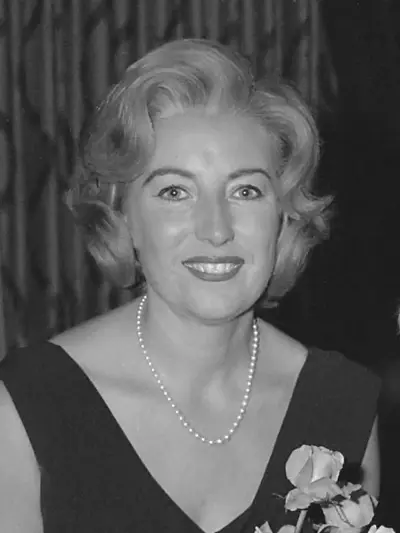
Dame Vera Margaret Lynn CH DBE OStJ was an English singer, songwriter and entertainer whose musical recordings and performances were very popular during the Second World War. She was widely referred to as the "Forces' Sweetheart" and gave outdoor concerts for the troops in Egypt, India and Burma during the war as part of Entertainments National Service Association (ENSA). The songs most associated with her are "We'll Meet Again", "(There'll Be Bluebirds Over) The White Cliffs of Dover", "A Nightingale Sang in Berkeley Square" and "There'll Always Be an England".
